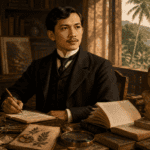
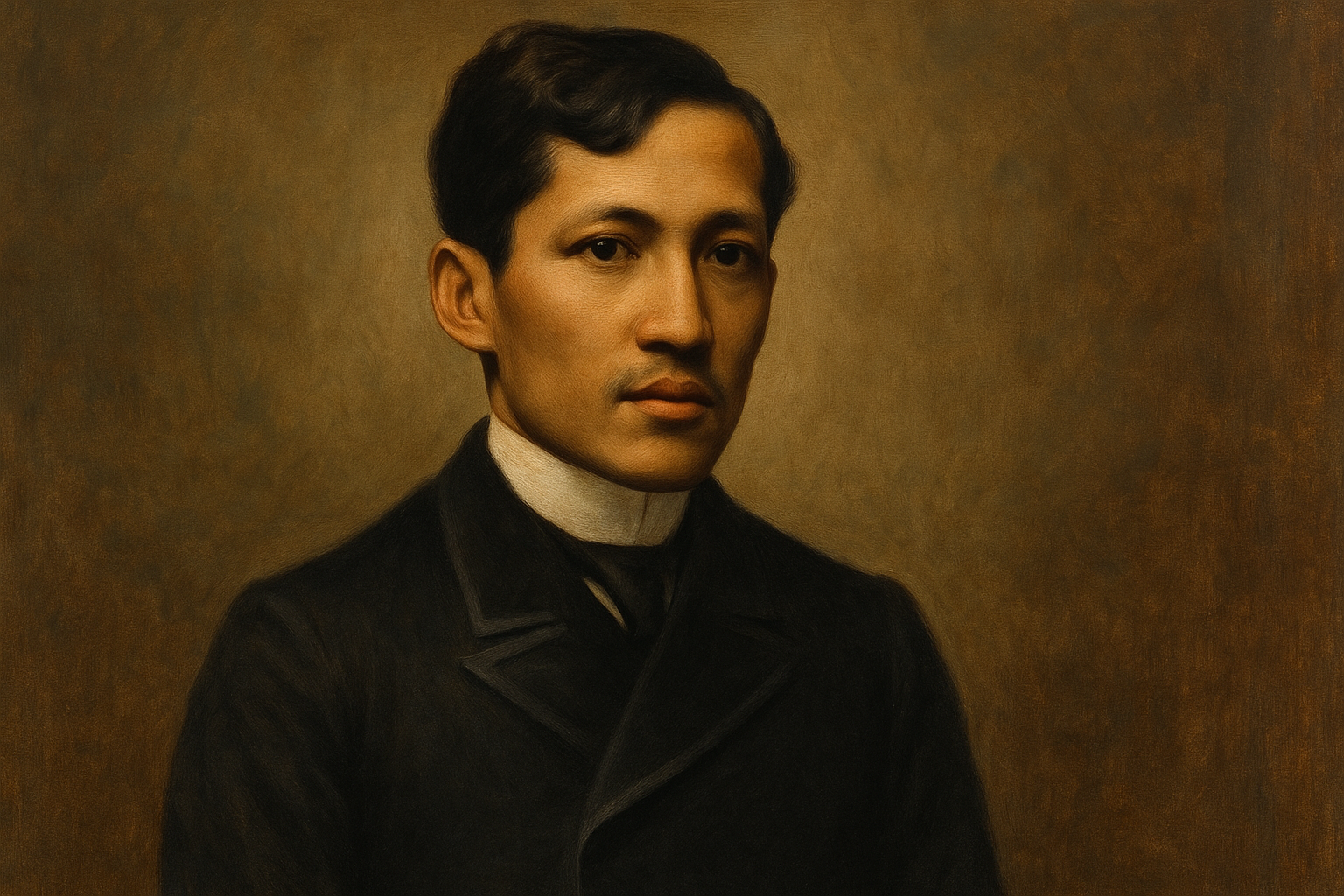
José Rizal was born on June 19, 1861, in Calamba, Laguna, in the Philippines — then a Spanish colony of nearly three hundred years — and was executed by firing squad on December 30, 1896, in Manila, at the age of thirty-five.
In between those two dates, he earned medical degrees in Spain, specialized in ophthalmology in Paris and Heidelberg, wrote two novels that the colonial government banned and the Filipino people read in secret, founded a civic organization, was exiled to a remote town in Mindanao for four years, conducted natural history research, built a school, treated hundreds of patients without charge, and wrote a farewell poem the night before his execution that is now recognized as one of the great poems of the nineteenth century.
He never led an army. He explicitly opposed the armed revolution that broke out in his name. He was convicted of inspiring it anyway and shot at dawn.
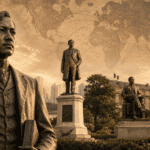
Today he is the national hero of the Philippines. His face is on the peso. His name is on a law that requires every Filipino student to read his novels. The field where he was executed is now a park named after him, at the center of which stands a monument that serves as Kilometer Zero — the reference point from which distances across the Philippines are measured.
This is his complete biography.
Early Life and Family
Rizal came from a family that occupied a comfortable position in colonial Philippine society — educated, landed, and aware of exactly how much the system above them was prepared to take.
Calamba and the Household That Made Him
Francisco Mercado, Rizal’s father, was a farmer and small businessman who leased agricultural land from the Dominican order and was sufficiently prosperous to educate all eleven of his children. The family belonged to the principalia — the Filipino landed gentry who enjoyed a degree of social recognition within the colonial system while remaining categorically beneath the Spanish-born elite.
Teodora Alonso, Rizal’s mother, was the more intellectually formative parent. Educated and widely read, she introduced her children to literature, history, and classical Spanish writing before any of them arrived at a formal school. She taught Rizal to read before he turned five. She was also, by his own account, the person who gave him his first direct encounter with colonial injustice: when he was approximately eleven years old, Teodora was arrested on a fabricated charge — accused by a Spanish official of attempting to poison a relative — and imprisoned for two years before the charge was dismissed. Rizal wrote about the episode throughout his life. It appears, transformed but recognizable, in the maternal figures of his novels.
For the full account of his family and its significance, see Rizal’s Family Background: The Household That Made Him and The Family Behind the Hero.
Childhood in Calamba and Biñan
Rizal showed early intellectual gifts that the family recognized and cultivated. At eight he wrote his first poem in Tagalog. At nine he was sent to Biñan, a neighboring town, to study under Maestro Justiniano Aquino Cruz — a strict and demanding teacher who introduced him to Spanish, Latin, and the classical curriculum. By the time Rizal arrived in Manila at eleven years old, he was already a serious student.
For more on this period, see Rizal’s Childhood and Early Education: From Calamba to Manila.
Education in Manila
Rizal arrived in Manila at eleven and moved through two very different institutions — one that stretched him and one that constrained him — before concluding that neither the city nor the colony could contain what he needed to become.
The Ateneo Municipal de Manila
Rizal entered the Ateneo Municipal de Manila in 1872, the same year the Cavite Mutiny resulted in the execution of Fathers Burgos, Gómez, and Zamora — three Filipino priests whose deaths would haunt his generation and appear in the dedication of his second novel. The coincidence of his arrival in Manila with that execution was formative: his older brother Paciano had been closely associated with Father Burgos, and the event impressed on the entire family the cost of speaking too clearly about colonial injustice.
At the Ateneo, run by the Jesuits, Rizal excelled across every discipline. He graduated with the highest distinction in 1877 at the age of sixteen. His teacher Father Francisco de Paula Sánchez recognized his literary gifts early and pushed him toward serious writing. Rizal’s relationship with the Jesuits was complex and lasting — he was educated by them, retained a genuine intellectual respect for the order throughout his life, and was placed under Jesuit supervision during his exile in Dapitan.
For more, see Rizal’s Education in Manila and Ateneo Years.
The University of Santo Tomás
From the Ateneo, Rizal moved to the University of Santo Tomás, where he studied medicine and philosophy. The experience was disappointing. UST was run by the Dominicans, and the atmosphere was markedly less intellectually open than the Jesuit environment he had come from. Filipino students were treated as categorically inferior to their Spanish classmates — seated in the back of lecture halls, graded differently, and generally managed in ways that confirmed rather than challenged the colonial hierarchy. Rizal took notes on all of it. UST gave him material as much as it gave him an education.
He completed his second year of medicine at UST before leaving the Philippines for Europe in 1882. For the full account, see Rizal’s Student Life at the University of Santo Tomás.
Europe: The Years That Made the Novelist
Rizal left the Philippines in 1882 with a medical education incomplete and a political education barely started. He would spend the next decade in Europe acquiring both, along with the material for two novels that would outlast the empire that produced him.
The Departure and Madrid
In May 1882, Rizal boarded the ship Salvadora in Manila without informing his parents or the colonial authorities, traveling under the name Jose Mercado — his family’s original surname — to avoid immediate detection. He was twenty years old. He would not return to the Philippines for four years.
In Madrid he enrolled at the Universidad Central, eventually completing degrees in Medicine and Philosophy and Letters. But the formal curriculum was only one part of his European education. He moved in reformist and intellectual circles, joined the Circulo Hispano-Filipino, contributed to discussions about the condition of the Philippines, and began developing the political analysis that would eventually produce his novels. He also began corresponding with Ferdinand Blumentritt, an Austrian ethnographer who became his closest intellectual friend — the relationship that produced some of the most revealing letters in Philippine history. For more on that friendship, see Rizal and Blumentritt: An Unlikely Friendship Across Continents.
The Propaganda Movement
In Madrid, Rizal joined the network of Filipino expatriate reformists who would become known as the Propaganda Movement. The movement operated primarily through journalism and public argument, publishing essays and petitions that called for equal rights for Filipinos, the removal of the abusive friars from positions of civil authority, and the treatment of the Philippines as a full province of Spain rather than a colony. The central publication was La Solidaridad, a Barcelona-based newspaper to which Rizal contributed numerous essays under his pen names Laong Laan and Dimasalang.
The movement’s leading figures included Marcelo H. del Pilar, Graciano López Jaena, and Mariano Ponce. Rizal was its most prominent voice but not always its most comfortable presence — his relationship with del Pilar was marked by genuine intellectual tension over questions of strategy and leadership that came to a head in 1891. For more on the Propaganda Movement and its members, see Rizal’s Friends and Allies: The Circle That Shaped a Hero.
Paris, Heidelberg, London, and Beyond
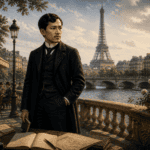
Rizal’s years in Europe were not spent only in Spain. He studied ophthalmology in Paris under Louis de Wecker and in Heidelberg, where he also wrote the poem “To the Flowers of Heidelberg.” He spent a year in London at the British Museum, annotating Antonio de Morga’s 1609 history of the Philippines — a project designed to demonstrate that the Filipino people had a rich and complex civilization before the Spanish arrived. For the full account of that year, see Rizal in London: His Year at the British Museum.
He also spent time in Paris, Brussels, and briefly in Japan — where he fell briefly but genuinely in love with a Japanese woman named O-Sei-San and described those weeks as among the happiest of his life. For more on his European years, see Rizal in Europe: The Years That Made the Novelist and Rizal in Spain: Barcelona, Madrid, and the Education of a Reformist.
The Novels
The two novels Rizal published in the late 1880s and early 1890s were the most consequential literary acts in Philippine history. They were also, by any reasonable measure, the primary reason he was eventually executed.
Noli Me Tangere (1887)
Noli Me Tangere was published in Berlin in March 1887, financed partly by his friend Máximo Viola, who lent him the funds needed to complete the printing when Rizal ran short of money. The novel follows Crisóstomo Ibarra, a young Filipino who returns from Europe to find his country unchanged — the friars as powerful as ever, the colonial system as corrupt, the people as trapped. The story ends in catastrophe: Ibarra loses everything, the school he tries to build is destroyed, and he is driven into exile.
The novel was banned in the Philippines almost immediately. The friars recognized themselves in its corrupt characters and petitioned the colonial government to suppress it. Copies were smuggled into the islands through the network run by José Ma. Basa in Hong Kong. Filipinos read it in secret, copied it by hand, and passed it to trusted friends. It became, in the most precise sense, underground literature. It was the first time many Filipinos had seen their own lives rendered in fiction — their grievances named, their dignity affirmed, their suffering treated as worthy of literature.
For full coverage of the novel, see the complete summary of Noli Me Tangere and the literary analysis of Noli Me Tangere.
El Filibusterismo (1891)
El Filibusterismo was published in Ghent in September 1891, financed this time by Valentín Ventura, to whom Rizal dedicated the first copy. The novel is darker and more morally complex than Noli. Ibarra returns as Simoun, a wealthy jeweler who has abandoned reform and is planning a violent revolution. Simoun’s plan fails. He dies alone, his mission in ruins, his methods having produced nothing but destruction.
The novel is Rizal’s most sustained engagement with the question of whether violence can produce genuine freedom — and his most honest admission that he did not have a definitive answer. For full coverage, see the complete summary of El Filibusterismo and the literary analysis of El Filibusterismo. For a comparison of the two novels, see Noli Me Tangere vs. El Filibusterismo: What Changed Between the Two Novels.
The First Return, La Liga Filipina, and Exile
Rizal returned to the Philippines twice — once in 1887, and again in 1892. The first return was cautious. The second was not, and it ended with him on a ship to Mindanao.
Return to the Philippines, 1887
Rizal returned to the Philippines for the first time in August 1887, after the publication of Noli Me Tangere. He had been warned by friends not to come — the friars were already petitioning for his arrest — but he came anyway, partly to see his family and partly to practice medicine in Calamba. He treated patients, including his mother, and observed at close range the Calamba agrarian dispute: a conflict between the Rizal family’s community and the Dominican friars over the terms of land leases that the friars were tightening aggressively.
He returned to Europe after a few months, but the Calamba dispute continued in his absence and eventually resulted in the eviction of his family from their land — an event that deepened his analysis of the colonial system and his personal grievance against the religious orders.
Return to the Philippines, 1892
Rizal’s second return, in June 1892, was more consequential and more dangerous. He had been living with his family in Hong Kong, practicing medicine, when he decided to return to Manila. Friends warned him emphatically that he would be arrested. He went anyway.
On July 3, 1892, he convened a meeting at a house in Tondo, Manila, that resulted in the founding of La Liga Filipina — a civic organization designed to promote mutual aid, education, legal assistance, and collective economic activity among Filipinos. Its methods were explicitly peaceful. It had no armed wing, no revolutionary program, no advocacy for independence. It lasted four days before the colonial government moved against it.
On July 6, Rizal was arrested. His rooms were searched. No weapons or evidence of armed conspiracy were found. On July 14, Governor-General Eulogio Despujol signed the order of deportation. The formal pretext included anti-friar pamphlets found in his luggage — which Rizal denied owning — and his connection to reformist correspondence intercepted by the colonial surveillance apparatus. The actual reason was simpler: he had returned, he had organized, and the colonial government had decided his presence in Manila was incompatible with public order.
For the full account of his arrest and exile, see Why Rizal Was Exiled to Dapitan and The Seditious Documents That Sent Rizal into Exile.
The Exile in Dapitan, 1892–1896
Dapitan was a small coastal town on the northwestern tip of Mindanao — remote, accessible only by sea, staffed by a Spanish military garrison and a Jesuit mission. The colonial government’s calculation was straightforward: isolation would diminish Rizal’s influence. Distance would erode his relevance. Time and obscurity would do what arrest and censorship had not.
The calculation was wrong.
During four years in Dapitan, Rizal established a medical practice and treated hundreds of patients, many of them for free. He performed eye surgeries, including difficult cataract operations, using techniques he had learned in Paris and Heidelberg. He opened a school for local boys, teaching without charge and covering subjects that ranged from reading and writing to agriculture, construction, and practical engineering. He designed and built a water supply system for the town — a gravity-fed aqueduct that brought clean water from a mountain spring to Dapitan’s population. He won a lottery prize jointly with the local Spanish commandant and used his share to purchase sixteen hectares of land along the coast, which he developed into a working farm and the grounds of his school and clinic.
He conducted extensive natural history research during these years, collecting specimens of Philippine flora and fauna and corresponding with European scientists. Several of the species he catalogued were later recognized as new to science and named in his honor — among them Draco rizali, a flying lizard, and Spathomeles rizali, a beetle. For the full account, see The Species Named After Rizal: Draco Rizali and the Naturalist of Dapitan.
He also fell in love. Josephine Bracken arrived in Dapitan in February 1895 with her stepfather, George Taufer, who was seeking treatment for his failing eyesight. Rizal treated Taufer and, in the process, met Josephine — practical, warm, and willing to stay. Their attempt to marry was blocked by the local priest, who refused to perform the ceremony without permissions that were not going to come. They exchanged private vows instead and built a life together within the limits of Rizal’s confinement. For more on this relationship, see Josephine Bracken: The Woman Who Stayed.
For the full account of the exile years, see Rizal in Dapitan: Four Years the Spanish Government Meant as Punishment.
The Revolution, Arrest, and Trial
When the revolution Rizal had argued against finally broke out in August 1896, he was at sea, en route to Cuba, with the written permission of the Governor-General in his pocket. It did not save him.
The Katipunan and Rizal’s Position
In May 1896, Pio Valenzuela traveled secretly to Dapitan as a representative of the Katipunan — the secret revolutionary society founded by Andrés Bonifacio that was preparing an armed uprising against Spain. The Katipunan used Rizal’s writings as spiritual foundation and wanted his endorsement. He refused. He told Valenzuela that the revolution was premature, that the Filipino people were not yet prepared for armed conflict, and that the likely result was catastrophic loss of life. He suggested that if the Katipunan were determined to proceed, they should first secure a commitment of support from Japan.
Valenzuela returned to Manila without the endorsement. The Katipunan launched its uprising in August 1896 anyway. Rizal had left Dapitan in July 1896, having received permission from Governor-General Ramón Blanco to travel to Cuba, where he had volunteered to serve as a military doctor for the Spanish army. He was at sea when the uprising began. He was intercepted, detained in Barcelona, and brought back to Manila.
The Trial
Rizal was charged with rebellion, sedition, and conspiracy before a military tribunal. The trial was conducted on December 26, 1896, and lasted a single day. The defense presented evidence of Rizal’s explicit opposition to the Katipunan’s armed uprising. The prosecution argued that his writings and his organizational activities had made the revolution possible regardless of his stated position. The military tribunal convicted him on all three charges.
The sentence was death. Governor-General Camilo de Polavieja — who had replaced Blanco after friar lobbying at the Spanish court — signed the execution order. For the full account of the trial, see Rizal’s Trial and Execution.
The Final Days and Execution
Rizal spent his final weeks in Fort Santiago, the Spanish colonial military headquarters in the Intramuros district of Manila. He received visits from family, from Josephine Bracken, and from the Jesuit priests assigned to attend him. He was offered a conditional retraction of his writings — a document prepared by the Jesuits that would have renounced his reformist positions — and signed a version of it, though the authenticity and the terms of what he actually signed remain disputed among historians.
On the night of December 29, he wrote the poem he later hid inside a small alcohol stove for his family to find. He completed it, folded it, and smuggled it out during a family visit. His sister Trinidad carried the stove from Fort Santiago without knowing what was inside. When the family found the poem after his execution, it had no title. Mariano Ponce, who arranged its first publication in Hong Kong in 1897, called it Mi Último Adiós — My Last Farewell. For the full text with stanza-by-stanza commentary, see Mi Último Adiós and My Last Farewell: Side by Side.
On the morning of December 30, 1896, Rizal was marched from Fort Santiago to the field at Bagumbayan — the public execution ground facing Manila Bay. He walked calmly. The execution was scheduled for dawn. He was turned to face away from the firing squad, the position reserved for traitors. At the moment of impact, witnesses said, he twisted his body and fell facing the sky.
He was thirty-five years old.
For the full account of his final days, see The Death of José Rizal: What Happened on December 30, 1896.
Legacy
The Philippine Revolution intensified immediately after Rizal’s execution. The Spanish-American War of 1898 ended Spain’s empire in Asia within months. The Philippines became an American territory, and under the American colonial administration, Rizal was formally institutionalized as the national hero — a designation that served American interests as much as Filipino ones, since Rizal the peaceful reformist was a safer symbol than Bonifacio the armed revolutionary.
The debate about this institutionalization — about who chose Rizal, why, and what was left out of the national mythology as a result — is live in the Philippines today and shows no sign of settling. What is not in dispute is what he left behind: two novels that changed the course of Philippine history, a poem written in the dark the night before his execution, and a life that demonstrated, in practice, what it looked like to take seriously the proposition that every person deserves dignity.
For more on his legacy and how he has been remembered, see Rizal’s Legacy: What He Left Behind and Why It Still Matters, How Rizal Became the National Hero of the Philippines, and The Rizal Law: Republic Act No. 1425.
Further Reading
The life of Rizal is covered in depth across this site. For his complete timeline, see José Rizal: A Complete Timeline. For his complete body of work, see The Complete Works of José Rizal. For the people around him, see The People Around Rizal: Family, Mentors, Friends, and Rivals. For the historical context in which he lived and worked, see Spanish Rule in the Philippines: The World That Made Rizal Necessary and The Propaganda Movement.
For a shorter introduction to Rizal written for readers encountering him for the first time, see Who Was José Rizal?