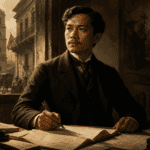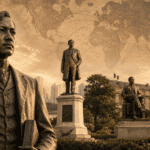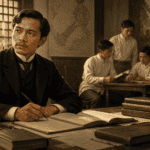
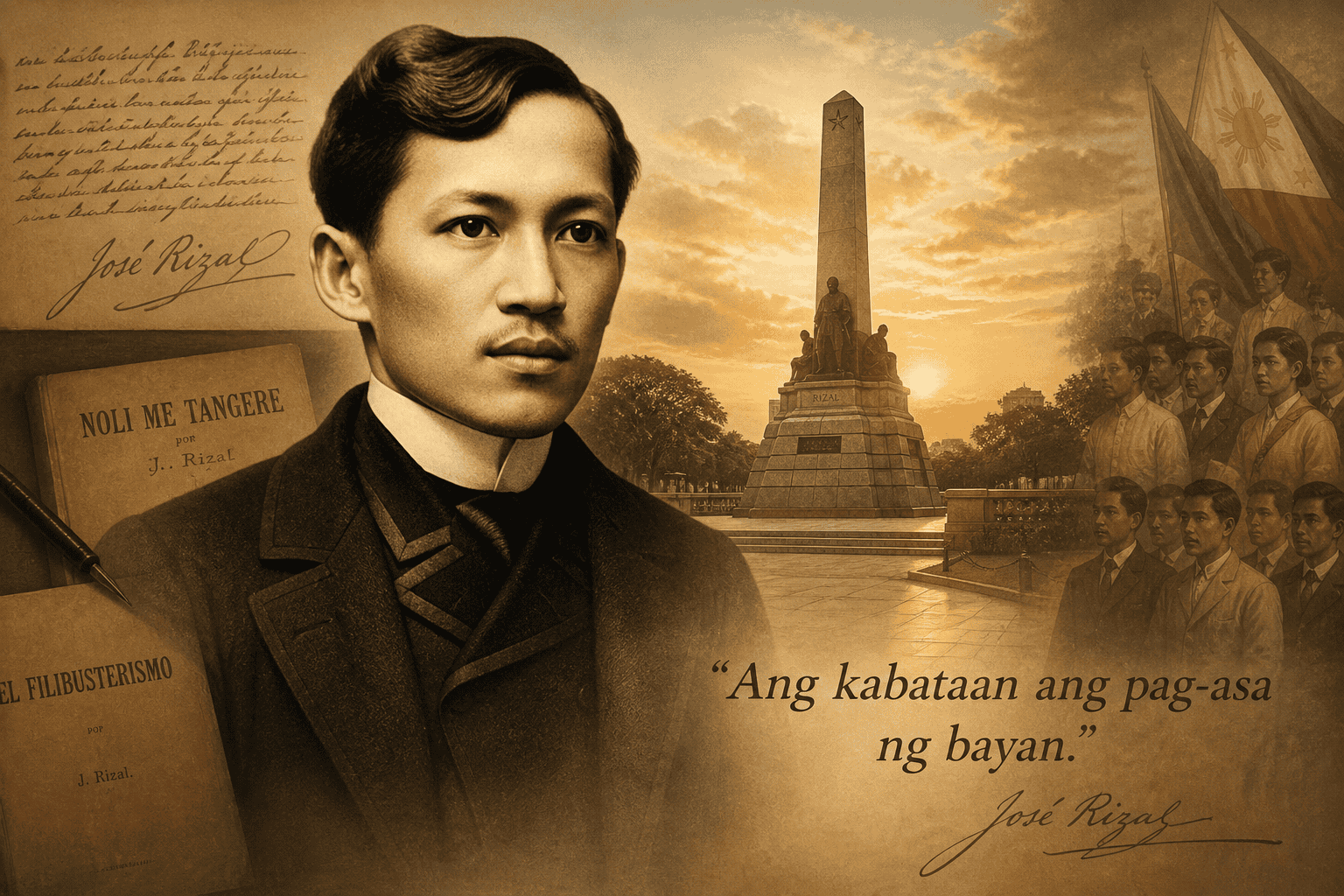
He is on the one-peso coin. His face is on school walls across the archipelago. Streets, parks, and an entire province bear his name. Monuments to him stand on four continents. All of this makes it easy to stop actually thinking about him — to let the ubiquity do the work that genuine engagement should do. What follows is an attempt to think about him anyway.
The Novels and What They Did
The most concrete and measurable part of Rizal’s legacy is also the most straightforward: he wrote two novels that the colonial government banned, and the banning backfired spectacularly.
Noli Me Tangere and El Filibusterismo gave Filipinos across the archipelago — across regions, languages, and class divisions — a shared story about who they were and what was being done to them. Before the novels, colonial censorship and the fragmentation of island life had made it difficult for Filipinos to see their individual experiences as part of a larger pattern. The novels named the pattern. Readers recognized themselves in the characters, which meant they recognized each other. That recognition is the foundation of what we call nationalism, and the novels produced it at scale in a way that political tracts and reform petitions could not.
The Spanish colonial government understood this. The banning, the confiscation of copies, the use of the novels as evidence at his trial — all of it reflects an accurate reading of what the books had done. You do not burn books that have not caught fire.
The novels are still taught in every Philippine school. They are read by students who find them slow in places and revelatory in others, which is about right for a nineteenth-century realist novel. That they are still capable of producing the second response is the measure of how well they were made.
The Intellectual Framework He Built
Less celebrated but equally important is the body of political and historical writing Rizal produced alongside the novels. The essays in La Solidaridad — particularly The Philippines a Century Hence and The Indolence of the Filipino — established something the reform movement had not previously had: a sustained, evidence-based argument about the colonial system as a system.
The Indolence of the Filipino is worth particular attention. The Spanish colonial narrative held that Filipino poverty and underdevelopment were the result of Filipino character — laziness, indifference, incapacity for self-governance. This was not merely a slur; it was the ideological justification for the entire colonial enterprise. Rizal demolished it with historical evidence, documenting pre-colonial trade networks, governance structures, and cultural achievements that predated Spanish arrival. The argument was: the poverty came after the colonizers. Blaming the colonized for the damage done by colonization is not an observation — it is the colonizer’s most useful lie.
This argument has not lost its relevance. Versions of it are made in post-colonial contexts around the world, and Rizal made it earlier and more systematically than almost anyone.
The Martyrdom and Its Consequences
Rizal’s execution on December 30, 1896 had exactly the opposite effect the colonial government intended. They killed him to extinguish a movement. They created its most powerful symbol instead.
This is worth being precise about. Rizal had publicly opposed the revolution. He had written a manifesto from his prison cell calling on Filipinos to abandon the uprising. He was executed for inspiring a revolt he had argued against. The trial used fabricated evidence and predetermined outcomes to convict a man whose actual crime was having written books that made people think.
The injustice was so transparent that it converted moderates into revolutionaries. Filipinos who had been persuaded by Rizal’s own argument — that peaceful reform was worth trying — watched the colonial government execute the man who had made that argument, on charges that were plainly false. The conclusion was inescapable: the system had no interest in reform. The peaceful path led to a firing squad.
In that sense, his death proved his novels right. He had written, in El Filibusterismo, about what happens to people who try to work within systems that have no intention of working with them. He found out personally.
What the Americans Did With His Legacy
This part is less often discussed in the celebratory version of Rizal’s legacy, but it matters.
When the United States took control of the Philippines after the Spanish-American War in 1898, they needed a national symbol that would foster unity without inspiring resistance to American rule. Rizal — the peaceful reformist who had opposed armed rebellion, who had been killed by Spain rather than by America — was the obvious choice. American colonial administrators actively promoted his memory, institutionalized December 30 as a holiday, and built his story into the school curriculum they designed for Filipino children.
This does not mean Rizal was merely an American invention. His influence on Filipino consciousness predated American intervention and was genuine. But it does mean that the specific shape his legacy took — the emphasis on peaceful reform, the downplaying of the more radical strands of Philippine nationalism, the elevation of Rizal over Bonifacio — was partly a product of what was politically convenient for a new colonial power.
Understanding this does not diminish Rizal. It makes his legacy more complex and more interesting. It also explains why the debate about whether Rizal or Bonifacio should be considered the true national hero is not simply an academic question — it is a debate about what kind of nation the Philippines wants to be, and which history it chooses to center.
The Rizal Law
Republic Act 1425, passed in 1956, requires that Rizal’s life and writings be taught in all Philippine schools. The law was controversial when it was passed — the Catholic Church opposed it, arguing that the anti-clerical elements of the novels would corrupt students — and it has remained a subject of debate ever since.
The law matters not because mandatory reading guarantees genuine engagement, but because it ensures that every generation of Filipinos encounters Rizal’s ideas at a formative age. Whether they find those ideas inspiring or tedious or somewhere in between, they encounter them. The conversation continues. Read more about the Rizal Law.
What Endures That Is Not on the Monuments
The monuments are everywhere — in plazas, on currency, in school names, on the one-peso coin. That kind of ubiquity is both a measure of significance and a risk: when a person is everywhere, they can become invisible, their face recognized but their ideas unexamined.
What endures in Rizal beyond the monuments is a set of questions he kept asking and never fully answered, because they do not have final answers. What do people owe the community that formed them? When does working within a corrupt system become complicity with it? What is the relationship between education and freedom — is one actually a precondition for the other? How should a people respond to injustice when the institutions meant to address injustice are themselves unjust?
These are not nineteenth-century questions. They are the questions any society that takes itself seriously has to keep asking. Rizal asked them with unusual clarity and at considerable personal cost. That is the part of his legacy that cannot be put on a monument, and the part that makes him worth returning to.