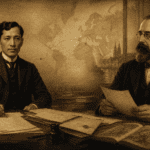
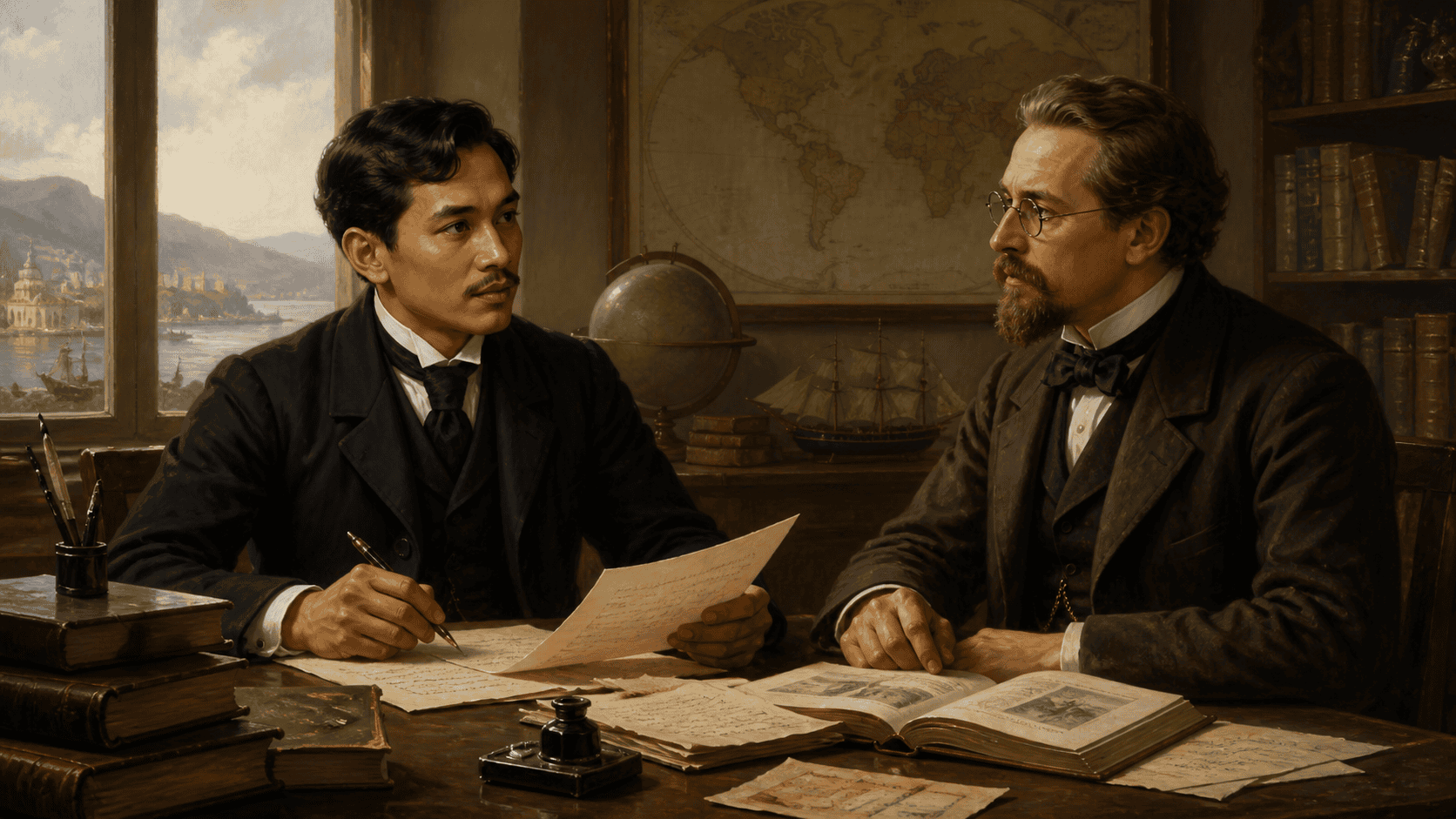
The letters José Rizal wrote to Ferdinand Blumentritt are among the most revealing documents in Philippine history — not because they say things his novels do not, but because they say them differently. The novels were written for an audience. The letters were written for a friend.
Blumentritt was an Austrian ethnographer and educator who became Rizal’s closest intellectual companion through correspondence that began in 1886 and continued until Rizal’s death a decade later. They exchanged hundreds of letters on history, linguistics, science, nationalism, and the condition of the Filipino people. Through those letters, a different Rizal comes into focus: less the polished polemicist, more the private man — exhausted sometimes, uncertain sometimes, and always carrying the weight of a country he could not stop thinking about.
The quotes gathered here are drawn from that correspondence, organized by theme, with context for each.
On Love of Country
The most famous line Rizal wrote to Blumentritt on the subject of patriotism came in a letter dated January 26, 1887, when he was twenty-five years old and Noli Me Tangere was still being prepared for printing in Berlin:
“I wish to show those who deny us patriotism that we know how to die for our country and convictions.”
What is striking about this line is not its content — that Rizal was a patriot is not news — but its timing. He wrote it nine years before his execution, at a moment when he was a young doctor and novelist, not yet a national symbol. The readiness for sacrifice expressed here was not theatrical. It was a private statement made to a trusted friend, which makes it harder to dismiss as rhetoric.
In another letter from the same period, he put the same feeling in a quieter register:
“My country has claims on me and I have duties toward her which I must fulfill.”
The word “duties” is important. Rizal did not write about love of country as a feeling — something warm and natural that arose without effort. He wrote about it as an obligation. The Philippines had claims on him the way a creditor has claims: something owed, something that had to be paid regardless of the personal cost.
On Colonial Injustice
Rizal’s novels named colonial abuse with precision and wit. His letters to Blumentritt named it with exhaustion. The tone is different — less satirical, more personal — because he was not writing for effect. He was describing what he saw to someone he trusted.
In a letter dated February 21, 1887, he wrote:
“Our people have been so oppressed that their spirit has been broken and their heart has been hardened.”
This is not an argument. It is an observation — the kind a physician makes after examining a patient. Rizal came from a family that had experienced colonial injustice directly: his mother’s unjust imprisonment, his family’s eventual dispossession of their farm in Calamba. When he wrote to Blumentritt about the condition of his people, he was drawing on things he had witnessed, not abstractions he had read about.
In another letter, from April 1887, he wrote:
“You cannot imagine how we suffer in my country, where ignorance and fanaticism combine to make a man’s life unbearable.”
Blumentritt, for his part, took these accounts seriously. He used what Rizal told him to write and speak about the Philippines in European academic circles — giving Rizal’s observations a wider audience than the letters alone could have reached.
On Reform and Education
Rizal wrote to Blumentritt frequently about education — what it meant, what the colonial system had done to it, and what it could do for the Philippines if it were allowed to function properly. His most direct statement on the subject:
“The school is the basis of society, and the teacher the basis of the school.”
It sounds like an aphorism, and in a sense it is — but it was also a political argument. The Spanish colonial system had placed education almost entirely in the hands of the religious orders, whose interest in Filipino intellectual development was, at best, instrumental. An educated Filipino population was a more dangerous one. Rizal believed the opposite: that education was the precondition for the kind of national consciousness that could eventually change the country’s situation.
His most controversial statement in the correspondence — one that was used against him by critics who felt he was too cautious — was this:
“Reforms must come from above, because from below they are violent.”
This line requires its context. Rizal was not defending the colonial government or suggesting that Filipinos should wait patiently for their rulers to become generous. He was making a structural observation: that when the people with power refuse to reform the systems they control, the pressure builds until it finds another outlet. The statement was a warning to the colonial authorities, not a counsel of patience to Filipinos.
On Filipino Identity
Blumentritt was professionally interested in the Philippines — its languages, its ethnography, its pre-colonial history — and Rizal became his primary source and intellectual interlocutor on those subjects. The letters they exchanged on Filipino identity are among the most substantive in the correspondence.
In one letter, Rizal wrote:
“The Filipino loves his country no less than the Spaniard does, but he is not allowed to show it.”
This is a response to a colonial narrative that Rizal encountered constantly: the claim that Filipinos lacked the kind of national feeling that would make self-governance possible. He rejected the argument directly. The absence of visible patriotism was not evidence of its absence — it was evidence of suppression. A people who expressed love of country too openly risked arrest.
On Fate and the Future
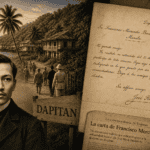
As Rizal’s political situation became more dangerous in the early 1890s, his letters to Blumentritt grew more reflective. He had been exiled to Dapitan in 1892. He was monitored, restricted, and increasingly aware that the reformist path he had chosen was narrowing around him.
In a letter from July 1886 — earlier than the exile, but already shadowed by awareness of the risks — he wrote:
“I do not know if I shall see the dawn of freedom, but I am certain my country will one day awaken.”
And in a letter from December 1891, as the political situation in the Philippines was deteriorating and his own position becoming more precarious:
“I am ready for my fate, whatever it may be, so long as my conscience is at peace.”
Blumentritt received news of Rizal’s execution in December 1896. By all accounts, he was devastated. He had spent years defending Rizal in European academic circles, translating his ideas, and arguing for the legitimacy of his cause. The friendship was, by any measure, one of the most significant of Rizal’s life — and the letters that survive it are among the most important primary sources we have for understanding who Rizal actually was, beneath the novels and the monuments.
A Note on Sources
The letters between Rizal and Blumentritt are preserved in the Epistolario Rizalino (Manila: National Historical Institute) and The Rizal–Blumentritt Correspondence (Manila: National Historical Commission), both of which are the authoritative sources for the quotes in this article. Readers who want to go deeper into the friendship itself will find the fullest account in the People section of this site.
For more on Rizal’s private voice, see the complete collection of Rizal quotes, including quotes from Noli Me Tangere and El Filibusterismo.