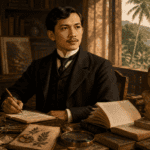
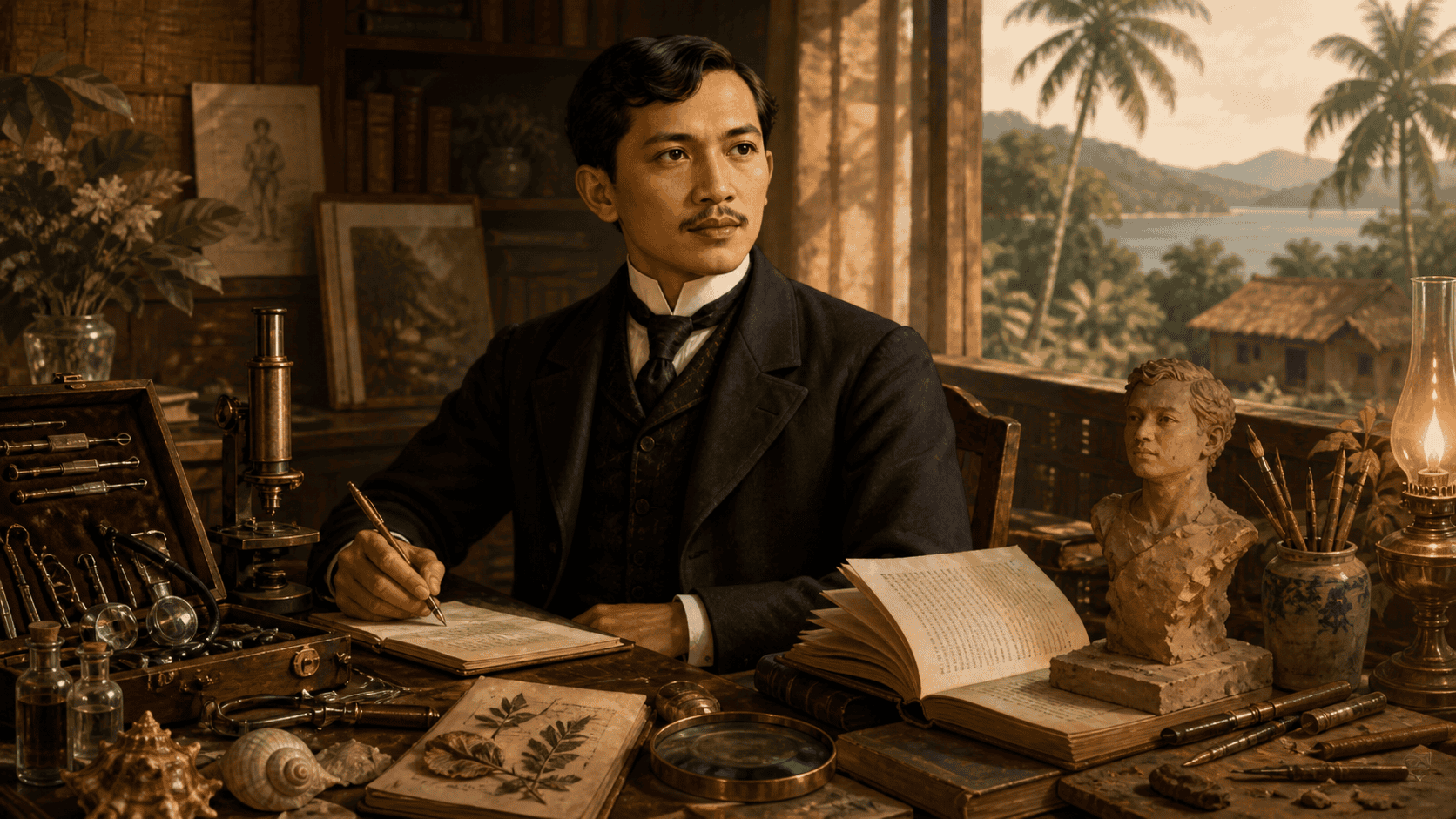
Most countries have a national hero. Few have one who was also a working ophthalmologist, a published novelist in two languages, a sculptor trained in Europe, a naturalist who discovered species science had never recorded, a poet, a painter, a linguist fluent in more than twenty languages, and a farmer who designed his own irrigation system while under house arrest.
José Rizal was all of these things — not as hobbies, not as party tricks, but at a level that earned him recognition from leading scientists, artists, and intellectuals of his day. He was the kind of person who makes you recalibrate what a single human life can contain.
He was also, for the record, thirty-five years old when Spain had him shot.
The Doctor Who Gave His Mother Back Her Sight
Rizal trained in medicine at the Universidad Central de Madrid and specialized in ophthalmology under two of Europe’s foremost eye surgeons — Dr. Otto Becker in Heidelberg and Dr. Louis de Wecker in Paris. These were not correspondence courses. Becker ran one of the most respected ophthalmological clinics in Germany. De Wecker was among the most innovative eye surgeons in France. Both treated Rizal as a serious student and a capable colleague.
When Rizal returned to the Philippines, one of his first patients was his own mother, Teodora Alonso, who had been losing her sight to cataracts. He operated on her eyes in Calamba. The surgery worked. She could see again.
That fact — a son crossing an ocean, training under the best surgeons in Europe, coming home and restoring his mother’s sight — tells you something about the particular quality of Rizal’s ambition. It was never purely abstract. He wanted to be excellent at things that mattered to actual people.
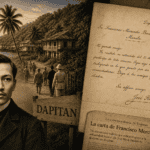
In Dapitan, where he spent four years in exile under Spanish surveillance, he treated hundreds of patients — many of them for free, many of them traveling from other islands specifically to see him. He performed eye operations, treated tropical diseases, and built a modest clinic with his own hands. The colonial government had sent him to the edge of the map. He turned it into a hospital.
The Novelist Who Collapsed an Empire
In 1887, Rizal published Noli Me Tangere — a novel so politically incendiary that the Spanish colonial government in the Philippines banned it, burned copies where they found them, and used its existence as evidence against its author when they put him on trial nine years later.
It is a sweeping, intimate, furious book about colonial life in the Philippines: the corruption of the Catholic friars, the humiliation of the ilustrado class, the machinery of Spanish power as experienced by the people living inside it. Rizal wrote it in Spanish — the language of the colonizer — partly so that educated Spaniards themselves could not pretend ignorance of what was being done in their name.
Four years later he published a sequel, El Filibusterismo — darker, angrier, less hopeful about reform as a viable path. Where Noli asked questions, Fili looked at what happens when questions go unanswered too long.
Both novels circulated through the Philippines in secret. People copied them by hand. Passages were read aloud in whispers. Andres Bonifacio, who would later found the revolutionary Katipunan, credited Rizal’s fiction as a primary influence on his political consciousness. The novels did not cause the Philippine Revolution. They created the moral imagination that made revolution possible — which, arguably, is the more lasting achievement.
The Sculptor and Painter Nobody Talks About
This is where Rizal begins to strain credulity — and yet the evidence sits in museums.
While studying medicine in Madrid, Rizal was also producing sculpture. His most famous work is Prometheus Bound — a small but technically accomplished piece depicting the Titan chained to his rock, made during his student years in Europe. The choice of subject matter was not accidental. A figure punished by the powerful for giving light to the powerless: Rizal understood exactly what he was making.
He also painted in watercolor and oil, sketching landscapes, portraits, and caricatures throughout his travels. His drawings of people — friends, patients, strangers on trains — show a quick observational eye and an instinct for character. These were not the doodles of a man with too much time. They were the work of someone who saw the visual world as another language worth learning.
In Dapitan he carved wooden figurines and taught his students to draw. Art, for Rizal, was never separate from his other work. It was another instrument of the same attention.
The Naturalist Who Put His Name on the Map of Life
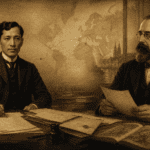
In 1887, while living in Berlin and finishing Noli Me Tangere, Rizal was also corresponding with Rudolf Virchow — one of the nineteenth century’s most eminent scientists, a founder of modern pathology, and a figure who did not distribute his time or attention carelessly. Virchow introduced Rizal to the Berlin Ethnological Society, where Rizal presented research on the ethnography and languages of the Philippines.
During his exile in Dapitan, Rizal spent years collecting specimens from the surrounding forests, rivers, and coastlines — insects, reptiles, plants, shells — and sending them to European scientific institutions. He discovered species that had never been formally recorded. In recognition, scientists named several of them after him: a flying lizard (Draco rizali), a frog (Rhacophorus rizali), a beetle, and others. To have a species named after you is one of science’s more durable honors. To have several named after you while you are simultaneously running a clinic, teaching school, and writing literature is something else entirely.
The Linguist Who Collected Languages
Estimates vary — some sources say nineteen, some say twenty-two — but by any count, the number of languages Rizal spoke or read with meaningful competency is extraordinary. His working languages included Spanish, Tagalog, Filipino, English, French, German, Latin, Greek, Arabic, Hebrew, Catalan, Italian, Chinese, Japanese, Dutch, and several Philippine regional languages.
This was not the dilettantism of a traveler who picks up pleasantries. Rizal translated William Tell from German into Tagalog. He annotated a seventeenth-century Spanish colonial history of the Philippines while living in London, writing his corrections and arguments into the margins in multiple languages. He studied Malay in order to trace the connections between Philippine and Southeast Asian linguistic roots.
Language, for Rizal, was both instrument and subject. He understood that how a people are allowed to name their own experience is a political question — and that colonialism exercises power, in part, by controlling which languages are considered legitimate.
What Holds It All Together
There is a temptation, when cataloguing the abilities of someone like Rizal, to treat them as a collection of impressive facts. But the abilities are not the point. The point is what they share.
Every skill Rizal developed — medicine, fiction, sculpture, natural history, languages — was a different form of the same underlying act: paying close attention to the world and refusing to look away from what you find. His novels are observational in exactly the same way his naturalist work is observational. His medicine required the same precision his sculpture demanded. His linguistic range gave him access to how different peoples understood themselves — which was, in the end, the raw material for everything else he did.
The Spanish colonial government understood this, even if they couldn’t quite articulate it. They didn’t execute him because he was a doctor or because he collected beetles. They executed him because a man who could see that clearly, and communicate that precisely, in that many languages, to that many audiences, was not a man a colonial empire could afford to leave alive.
He was thirty-five. He had barely started.