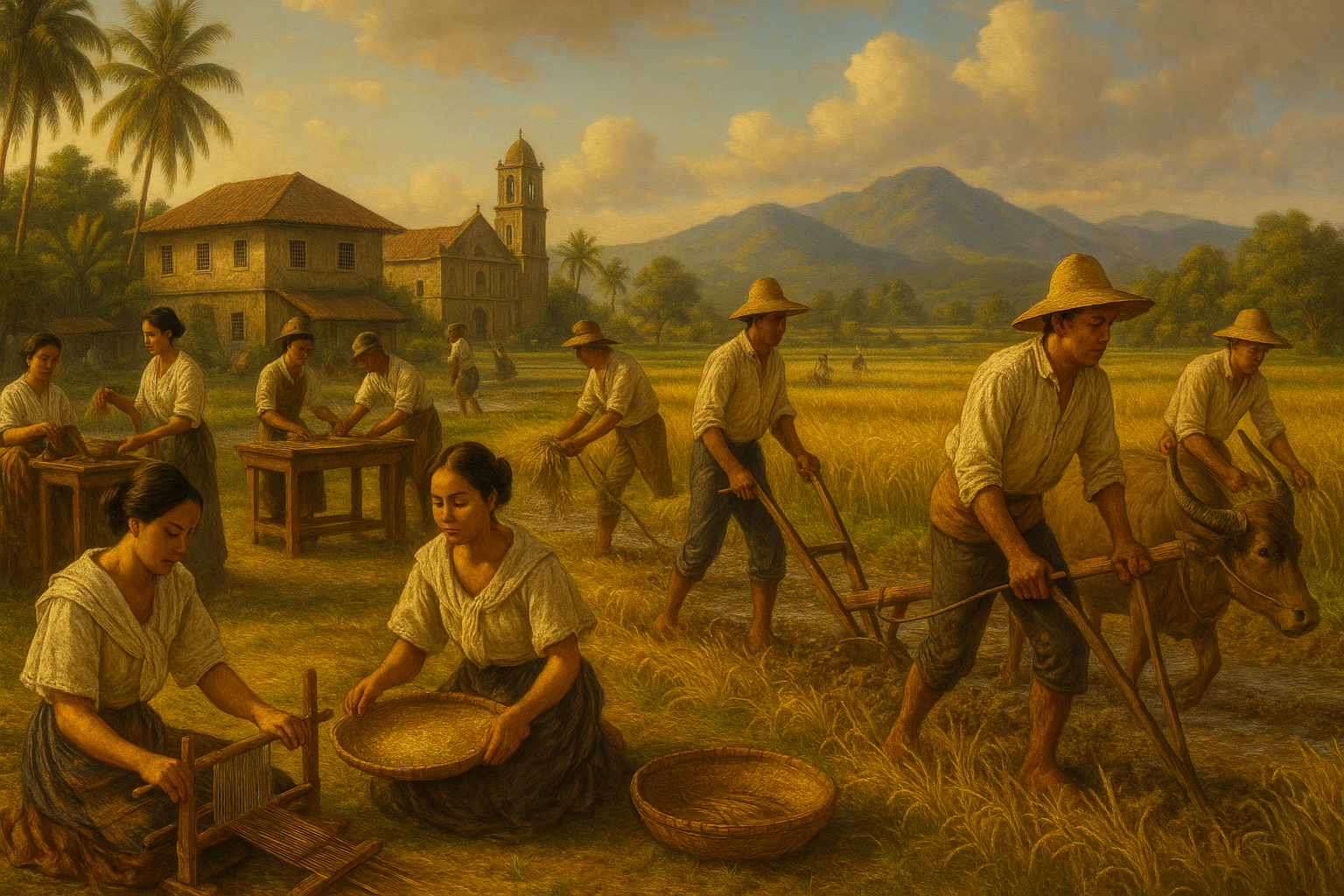
Rizal wrote Imno sa Paggawa in January 1888 as a tribute to the people of Lipa, Batangas — the Lipeños, as they are known — and the qualities he associated with them: industriousness, resilience, and a quiet dignity in hard work. It was a poem written for a specific community, addressed to people he knew, not a general statement aimed at an abstract Filipino public.
That origin matters for how the poem reads. Rizal chose Tagalog, not Spanish, which placed the poem within reach of the people it honored. He structured it as a choral piece, giving separate stanzas to men, wives, maidens, and children, with a shared chorus returning between each section. The form itself made an argument: that the work of building and sustaining a nation belongs to everyone in a household, not only to those with education or public standing.
The English translation appears on this site as Hymn to Labor. This page preserves the original Tagalog text.
Full Poem: Imno sa Paggawa
KORO
Dahilan sa Bayan sa pagdirigmaan,
Dahil sa Bayan din sa kapayapaan,
Itong Pilipino ay maasahang
Marunong mabuhay o kaya’y mamatay.
(Mga Lalaki)
Nakukulayan na ang dakong Silangan,
Tayo na sa bukid, paggawa’y simulan,
Pagka’t ang paggawa’y siyang sumusuhay
Sa bayan, sa angkan, sa ating tahanan.
Lupa’y maaring magmamatigas naman,
At magwalang-awa ang sikat ng araw
Kung dahil sa anak, asawa at Bayan,
Ang lahat sa ating pagsinta’y gagaan.
KORO
(Mga Babaing May Asawa)
Magmasigla kayong yao sa gawain,
Pagka’t ang baba’y nasa-bahay natin,
At itinuturo sa batang mahalin
Ang Bayan, ang dunong at gawang magaling
Pagdatal ng gabi ng pagpapahinga,
Kayo’y inaantay ng tuwa’t ligaya
At kung magkataong saama ang manguna,
Ang magpapatuloy ang gawa’y ang sinta.
KORO
(Mga Dalaga)
Mabuhay! Mabuhay! Paggawa’y purihin
Na siyang sa Baya’y nagbibigay-ningning!
At dahil sa kanya’y taas ng paningin,
Yamang siya’y dugo at buhay na angkin.
At kung may binatang nais na lumigaw,
Ang paggawa’y siyang ipaninindigan;
Sapagka’t ang taong may sipag na taglay,
Sa iaanak nya’y magbibigay-buhay.
KORO
(Mga Bata)
Kami ay turuan ninyo ng gawain;
At ang bukas ninyo’y aming tutuntunin
Bukas, kung tumawag ang bayan sa amin,
Ang inyong ginawa’y aming tatapusin.
Kasabihan niyong mga matatanda:
“Kung ano ang ama’y gayon din ang bata,”
sapagka’t sa patay ang papuri’y wala.
Maliban sa isang anak na dakila.
Notes on the Text
The poem’s structure — koro (chorus) followed by four voices — was deliberate. By assigning each stanza to a distinct group within Filipino society, Rizal made the point that labor in service of the Bayan is not the work of one kind of person. The farmer who rises at dawn, the wife who raises children in the values of the country, the maiden who measures a man’s worth by his willingness to work, the child who asks to be taught — all of them are part of the same effort.
The chorus frames that effort in terms that go beyond ordinary civic duty. The Filipino, it says, knows how to live or, if necessary, how to die — whether in war or in peace. For a poem written in 1888, when the Propaganda Movement was pressing its case for reform through writing and persuasion, this was a quietly pointed claim: that the people being governed were not passive subjects but a community with their own standards, their own loyalty, and their own understanding of what they owed each other and their country.
Rizal was in Europe when he wrote this — already far from Lipa, far from the Philippines. Writing the poem in Tagalog, for Lipeños, was a way of staying connected to the particularity of Filipino life at a moment when his public work was necessarily conducted in Spanish and directed at audiences in Madrid and across Europe.