Quick Summary
“Hymn to Talisay” is a spirited and hopeful poem Jose Rizal wrote for his pupils in Dapitan. It captures the joy of learning, the value of nature, and the sense of community he built with the boys he taught during his exile. The poem reveals a tender side of Rizal: the teacher dedicated to guiding the youth toward knowledge and character.
Background
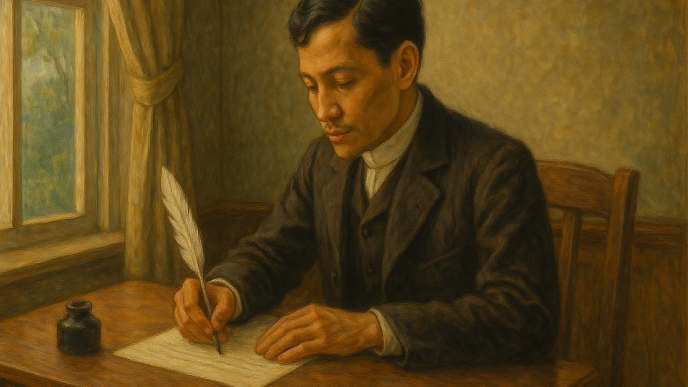
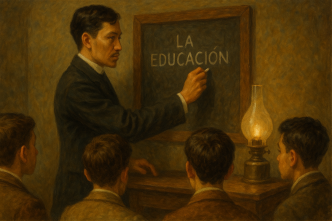
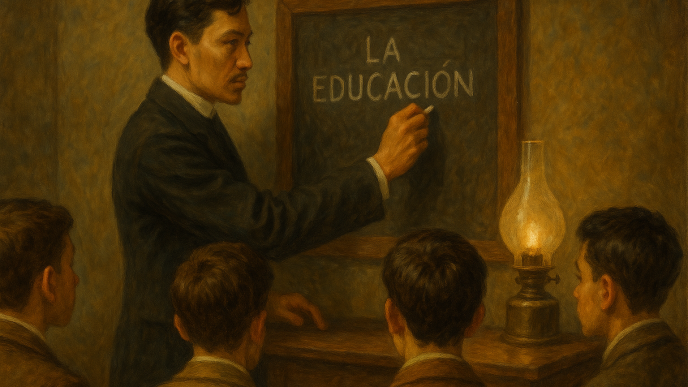
Jose Rizal wrote “Hymn to Talisay” (“Himno a Talisay”) during his years of exile in Dapitan from 1892 to 1896. Far from silencing him, exile became one of the most productive periods of his life. He opened a small school, taught local boys mathematics, science, Spanish, English, geography, and moral instruction, and built an environment where learning and nature were inseparable.
Talisay was the name of his property along the shores of Dapitan — a peaceful escape filled with trees, clear water, cultivated plants, and simple structures where his students studied and played. The poem was composed for the boys as a kind of school anthem, meant to inspire them as they worked, explored, and grew under Rizal’s guidance.
Unlike his political writings, “Hymn to Talisay” reflects a gentler mission. It reveals how deeply Rizal believed in the transformative power of education. Teaching was not simply a pastime for him; it was an act of rebuilding the Filipino spirit. The poem also shows the joy he felt in Dapitan, surrounded by eager students and the beauty of nature. His Dapitan school embodied his ideal: a place where education uplifted both mind and heart.
Full Poem: Hymn to Talisay
Hail, Talisay,
firm and faithful,
ever forward
march elate!
You, victorious,
the elements
—land, sea and air—
shall dominate!
The sandy beach of Dapitan
and the rocks of its lofty mountain
are your throne. O sacred asylum
where I passed my childhood days!
In your valley covered with flowers
and shaded by fruitful orchards,
our minds received their formation,
both body and soul, by your grace.
We are children, children born late,
but our spirits are fresh and healthy;
strong men shall we be tomorrow
that can guard a family right.
We are children that nothing frightens,
not the waves, nor the storm, nor the thunder;
the arm ready, the young face tranquil,
in a fix we shall know how to fight.
We ransack the sand in our frolic;
through the caves and the thickets we ramble;
our houses are built upon rocks;
our arms reach far and wide.
No darkness, and no dark night,
that we fear, no savage tempest;
if the devil himself comes forward,
we shall catch him, dead or alive!
Talisayon, the people call us:
a great soul in a little body;
in Dapitan and all its region
Talisay has no match!
Our reservoir is unequalled;
our precipice is a deep chasm;
and when we go rowing, our bancas
no banca in the world can catch!
We study the problems of science
and the history of the nation.
We speak some three or four languages;
faith and reason we span.
Our hands can wield at the same time
the knife, the pen and the spade,
the picket, the rifle, the sword—
companions of a brave man.
Long live luxuriant Talisay!
Our voices exalt you in chorus,
clear star, dear treasure of childhood,
a childhood you guide and please.
In the struggles that await the grown man,
subject to pain and sorrow,
your memory shall be his amulet;
and your name, in the tomb, his peace.
Analysis
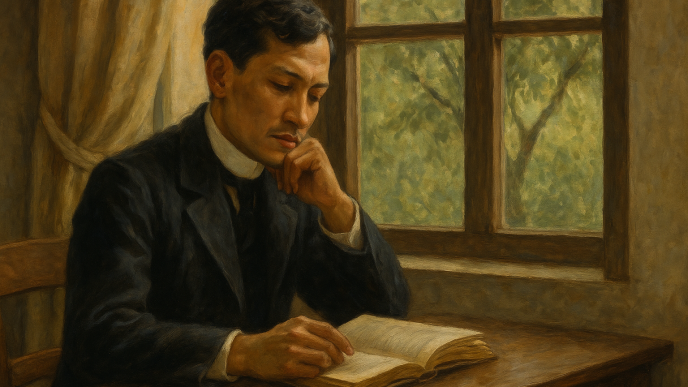
“Hymn to Talisay” is an essential part of understanding Rizal the educator. While he is often remembered as the fiery novelist, martyr, and reformist thinker, this poem reveals a quieter legacy—one rooted in nurturing the minds of the young. The poem is animated by a joyful affection for his students and by an unwavering belief in learning as a pathway to national renewal.
The imagery of nature is central. Talisay, for Rizal, was not only a physical space but an ideal classroom. Instead of rote memorization or rigid colonial instruction, he promoted a sensory, experiential form of education. The lines encourage children to observe, to explore, and to draw lessons from the natural world. Knowledge is described as something alive, blooming in every corner of their surroundings.
Rizal’s teaching philosophy was decades ahead of his time. He believed that character must grow alongside intellect. This is why the poem’s tone blends delight with moral guidance. He calls the boys “children of the sun,” implying that they carry within them the light of potential and the future of the nation. Nature, for him, becomes a mirror of virtue—orderly, purposeful, harmonious. By learning from it, the youth could develop discipline, empathy, and resilience.
The poem also reveals Rizal’s emotional world during exile. Dapitan was both a place of separation and a space of flourishing. “Hymn to Talisay” stands as proof that even in isolation from political struggle, he remained devoted to the country’s future. If he could not change the nation through reform or writing, he would do so through the children in his care. The optimism of the poem reflects a man who, despite imprisonment and persecution, continued to believe in the power of education to shape a better Philippines.
More than a simple school anthem, “Hymn to Talisay” is a testament to the teacher in Rizal — a man who found hope in the laughter of students, in morning sunlight over the sea, and in the quiet labor of shaping young minds. Today, it remains an inspiring reminder that national transformation begins in the hands and hearts of the youth.