
Before You Go: What This Place Actually Is
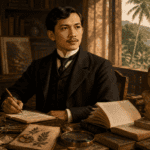
Most travel guides describe Rizal Park as a 58-hectare green space in the heart of Manila. That is accurate but incomplete. It is also the site of Jose Rizal’s execution on December 30, 1896 — the event that turned a novelist and doctor into a martyr and accelerated the end of Spanish colonial rule in Asia.
Understanding that history doesn’t make the park somber. It makes it layered. You can spend an afternoon here watching children run across the lawns and still feel, if you pay attention, the weight of what happened on this ground. That combination — leisure and memory, the living city and its history — is what makes Rizal Park unlike any other park in Southeast Asia.
Getting There
Rizal Park sits along Roxas Boulevard in Ermita, Manila, directly across from Manila Bay. It is bordered by Kalaw Avenue to the south and the National Museum complex to the north.
Getting there is straightforward. Grab or taxi from most Manila hotels takes 10–20 minutes depending on traffic. The nearest LRT station is United Nations (LRT Line 1), about a 10-minute walk from the park’s main entrance. If you’re coming from Intramuros, it’s a short walk south along the bay.
Entrance to the park is free.
The Rizal Monument: Start Here
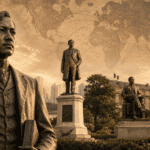
Every visit begins at the same place: the Rizal Monument at the northern end of the park, where an obelisk rises above a bronze statue of Rizal and an honor guard of Philippine Marines stands watch around the clock.
The monument is deceptively simple. There are no grand archways or elaborate gates — just the statue, the obelisk, and the Philippine flag. But Rizal’s remains are interred here, beneath the stone, and that fact gives the place a gravity that settles on you quietly.
The best time to visit is early morning, before Manila’s heat builds and before the tourist groups arrive. The light at 7am is soft, the park is mostly populated by joggers and vendors setting up their stalls, and you can stand in front of the monument without crowds. Late afternoon — around 5pm — is the other sweet spot, when the golden hour hits the obelisk and the bay glows behind it.
The Execution Site
A short walk from the monument, a bronze tableau marks the exact spot where Rizal was shot on December 30, 1896. The figures — Rizal facing the dawn, soldiers positioned behind him — are rendered in quiet, unfussy detail.
It is worth spending a few minutes here, away from the busier areas of the park. This is where it happened. The execution that Spain intended as a warning became instead the spark that finished their empire in Asia.
Kilometer Zero
A few steps from the monument is a small marker that most visitors walk past without noticing: Kilometer Zero, the fixed point from which road distances across the entire Philippine archipelago are measured. Every highway sign in the country is calibrated from this spot.
It is a small thing, but it reframes the park’s significance. Rizal Park is not just a memorial. It is, in a very literal sense, the center of the Philippines.
The Gardens
The park contains two walled garden spaces that offer a genuine escape from the heat and noise of Manila.
The Japanese Garden is quiet and carefully landscaped — koi ponds, arched bridges, stone lanterns, and curved paths through bamboo. It is one of Manila’s most genuinely peaceful spots and is worth at least 20 minutes of slow walking.
The Chinese Garden next door follows a similar principle, with moon gates, pagoda-style structures, and a pond that reflects the surrounding greenery. Both gardens tend to be less crowded than the main lawn areas and feel like a different city entirely.
The National Museum Complex: Don’t Skip This
Directly across the street from Rizal Park, close enough to walk to in five minutes, sits one of the most underrated museum complexes in Southeast Asia. Three buildings, all free, all world-class:
The National Museum of Fine Arts is housed in a stunning neoclassical building that was once the seat of the Philippine legislature. Its permanent collection includes Juan Luna’s Spoliarium — a massive, visceral painting that Rizal himself famously championed when it won a gold medal in Madrid in 1884. Seeing it in person, after reading about Rizal’s life, hits differently.
The National Museum of Anthropology covers Philippine cultural heritage from prehistory to the present — indigenous peoples, regional traditions, migration, and identity. The Tabon Cave artifacts and the Laguna Copperplate Inscription (the oldest known written document found in the Philippines) are here.
The National Museum of Natural History is the newest of the three and the most visually dramatic, built around a soaring central atrium called the Tree of Life. Philippine biodiversity — the birds, fish, mammals, and ecosystems of an extraordinary archipelago — is displayed with genuine care.
A practical note: the museums are air-conditioned. If you visit the park in the morning, the smartest plan is to move indoors during the hottest midday hours (noon to 3pm) and return to the park in the late afternoon.
The Open-Air Theater and Concert Grounds
The park’s amphitheater and grandstand area host free concerts, cultural performances, and civic events on weekends and holidays. If your visit coincides with one, stay. Manila performs — folk dance, brass bands, choir competitions, impromptu rehearsals — with an enthusiasm that is immediately infectious.
Even on quiet days, the grandstand area is worth a walk. It looks out over the bay and gives you a sense of the park’s scale.
The Relief Map of the Philippines
In the southern section of the park sits a large outdoor relief map of the Philippine archipelago — all 7,000-plus islands rendered in stone. It is particularly good with children, who tend to spend considerable time trying to find their home province. It is also a quietly effective reminder of what an extraordinary geographic fact the Philippines is: an archipelago of that size, spread across that much ocean, somehow forming a single nation.
Nearby: Fort Santiago and Intramuros
If you have a full day, combine Rizal Park with Intramuros — the old Spanish walled city — a short Grab ride away.
Fort Santiago, inside Intramuros, is where Rizal spent his final days before execution. The Rizal Shrine within the fort displays his manuscripts, personal letters, the clothes he wore on the morning of his death, and a recreation of his prison cell. Walking through it after visiting the execution site at Rizal Park completes a circuit — you end where he ended, having begun where he began his last night.
Intramuros itself is worth several hours: the walls, the churches, the cobblestone streets, and the restaurants that have set up inside colonial-era buildings. Bambike offers guided bicycle tours through the walled city that are excellent for first-time visitors.
Practical Information
Opening hours: The park is open daily and accessible at all hours, though the gardens and some facilities have specific opening times (generally 8am–5pm).
Best time to visit: Early morning (6–9am) or late afternoon (4–7pm). Avoid noon to 3pm — Manila’s heat is serious and the park offers limited shade in the central areas.
What to bring: Water, comfortable shoes, a hat or umbrella, sunscreen, and a camera. The sunset over Manila Bay, visible from the park’s western edge, is legitimately one of the best in Asia.
How long to spend: The park alone warrants 1–2 hours. Add the National Museums and you’re looking at a half-day. Add Intramuros and it’s a full day.
Food: Vendors inside the park sell local snacks — taho (warm silken tofu with syrup), corn, ice cream, fresh fruit. Better sit-down options are along Roxas Boulevard and inside Intramuros.
Safety: The main areas of the park are safe and well-patrolled during daylight. Stay on the main paths, keep aware of your belongings in crowded sections, and avoid unlit areas after dark.
One Last Thing
People come to Rizal Park to jog, to picnic, to take photos, to escape the heat. But every now and then — standing in front of the monument, or at the execution site, or reading the inscription on the obelisk — something shifts. You realize you are standing in a place where an extraordinary thing happened: a man chose truth over safety, paid for it with his life, and in doing so, changed the course of history.
That is not a small thing to be standing on.
Learn more about the man behind the monument: Jose Rizal: Complete Biography Explore the park’s history: Rizal Park