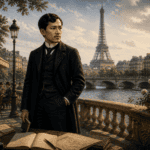
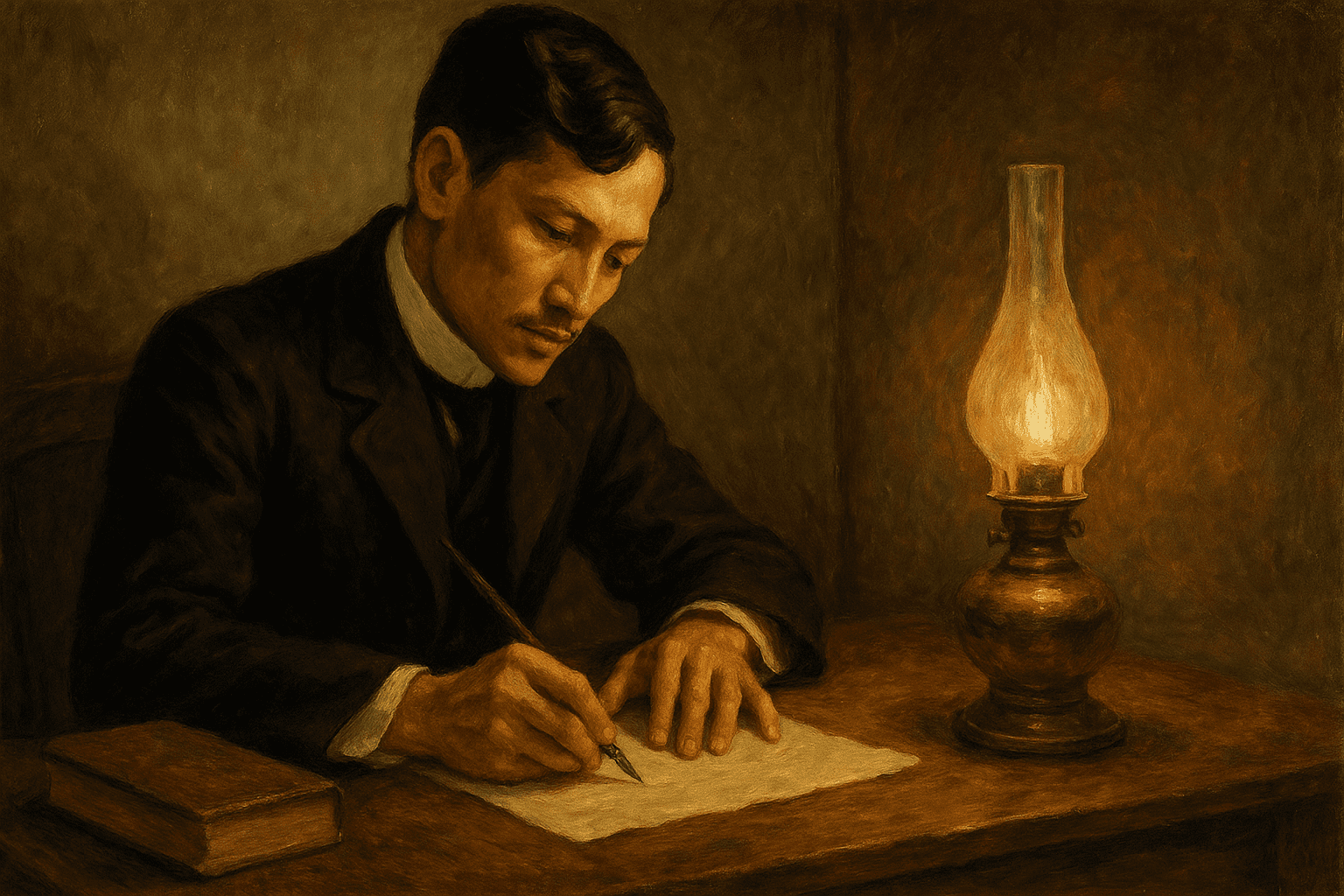
José Rizal wrote “They Ask Me for Verses!” (Me Piden Versos) during his time in Madrid, when he was deeply immersed in the Filipino expatriate community. Outwardly, these were years of social gatherings, literary meetings, and spirited intellectual debate. But beneath that lively environment lay a painful truth: Rizal was profoundly homesick. Surrounded by peers who admired his talent, he was often asked to recite poems at special events — yet the longer he stayed abroad, the more difficult it became for him to write with joy.
This poem emerged from that internal struggle. Asked once again to compose verses for a gathering, Rizal found himself unable to summon the poetic voice that once flowed so easily. His heart was weighed down by worry for the Philippines, by memories of his youth, and by the painful realization that distance had changed him. They Ask Me for Verses! became a confession — a lyrical admission that exile had silenced his inspiration, and that beauty, once natural, now felt hollow against the sorrow of separation.
Full Poem: They Ask Me for Verses!
I
They bid me strike the lyre
so long now mute and broken,
but not a note can I waken
nor will my muse inspire!
She stammers coldly and babbles
when tortured by my mind;
she lies when she laughs and thrills
as she lies in her lamentation,
for in my sad isolation
my soul nor frolics nor feels.
II
There was a time, ’tis true,
but now that time has vanished
when indulgent love or friendship
called me a poet too.
Now of that time there lingers
hardly a memory,
as from a celebration
some mysterious refrain
that haunts the ears will remain
of the orchestra’s actuation.
III
A scarce-grown plant I seem,
uprooted from the Orient,
where perfume is the atmosphere
and where life is a dream.
O land that is never forgotten!
And these have taught me to sing:
the birds with their melody,
the cataracts with their force
and, on the swollen shores,
the murmuring of the sea.
IV
While in my childhood days
I could smile upon her sunshine,
I felt in my bosom, seething,
a fierce volcano ablaze.
A poet was I, for I wanted
with my verses, with my breath,
to say to the swift wind: “Fly
and propagate her renown!
Praise her from zone to zone,
from the earth up to the sky!”
V
I left her! My native hearth,
a tree despoiled and shriveled,
no longer repeats the echo
of my old songs of mirth.
I sailed across the vast ocean,
craving to change my fate,
not noting, in my madness,
that, instead of the weal I sought,
the sea around me wrought
the spectre of death and sadness.
The dreams of younger hours,
love, enthusiasm, desire,
have been left there under the skies
of that fair land of flowers.
Oh, do not ask of my heart
that languishes, songs of love!
For, as without peace I tread
this desert of no surprises,
I feel that my soul agonizes
and that my spirit is dead.
Analysis
They Ask Me for Verses! is one of Rizal’s most personal and revealing poems — a confession delivered with quiet honesty. Rather than performing for his audience, Rizal opens his heart and admits that exile has drained him of inspiration. In the first stanza, he describes the lyre — a symbol of poetic creativity — as “mute and broken,” reflecting not only the silence of his muse but also the emotional exhaustion brought on by distance from his homeland. The poet cannot force beauty out of a heavy heart; even when he tries, his muse only “stammers,” unable to echo the sincerity of his earlier works.
The second stanza deepens this sense of loss by recalling a time when friends called him a poet with ease. Those days have disappeared, leaving only faint, haunting traces like the dying notes of a distant orchestra. Here, Rizal admits a painful reality familiar to anyone who has lived far from home: what once felt natural and effortless becomes strained and distant, eroded by time and sorrow.
In the third stanza, Rizal presents one of his most powerful metaphors. He compares himself to a “scarce-grown plant… uprooted from the Orient,” suggesting that a poet draws nourishment from the land and culture that shaped him. Removed from the Philippines — a place filled with melody, color, and life — he withers in unfamiliar soil. The images of birds, waterfalls, and the “murmuring of the sea” highlight how deeply his poetic voice was shaped by the natural rhythms of home. Exile has severed him from these sources of inspiration.
The fourth stanza returns to his childhood, when he felt the “volcano ablaze” within him — the early stirrings of nationalism and artistic passion. His youthful dream was to use poetry to praise his beloved country in every corner of the world. This intensity of love makes his present silence even more painful. He was once a poet with a mission; now he is a poet struggling to speak.
The final stanza brings the emotional arc to its climax. Leaving the Philippines was meant to bring opportunity and growth, but instead it brought sorrow and isolation. The sea that promised a new beginning became a symbol of “death and sadness.” Now, the dreams of youth — love, enthusiasm, desire — lie abandoned under the skies of his homeland. He walks through life as though it were a barren desert, devoid of delight or surprise. His heart can no longer produce “songs of love” because the spirit that once fueled his poetry has grown weary.
Ultimately, They Ask Me for Verses! is a poem about the emotional cost of patriotism. Rizal reveals that loving one’s country deeply can be both a source of inspiration and a cause of immense pain. His inability to write is not a failure of talent; it is the natural consequence of a heart heavy with national longing. The poem stands as one of his most vulnerable works, showing that behind the courage of a reformist and the intellect of a scholar was a man who missed home so intensely that even poetry — his greatest gift — fell silent.