Background
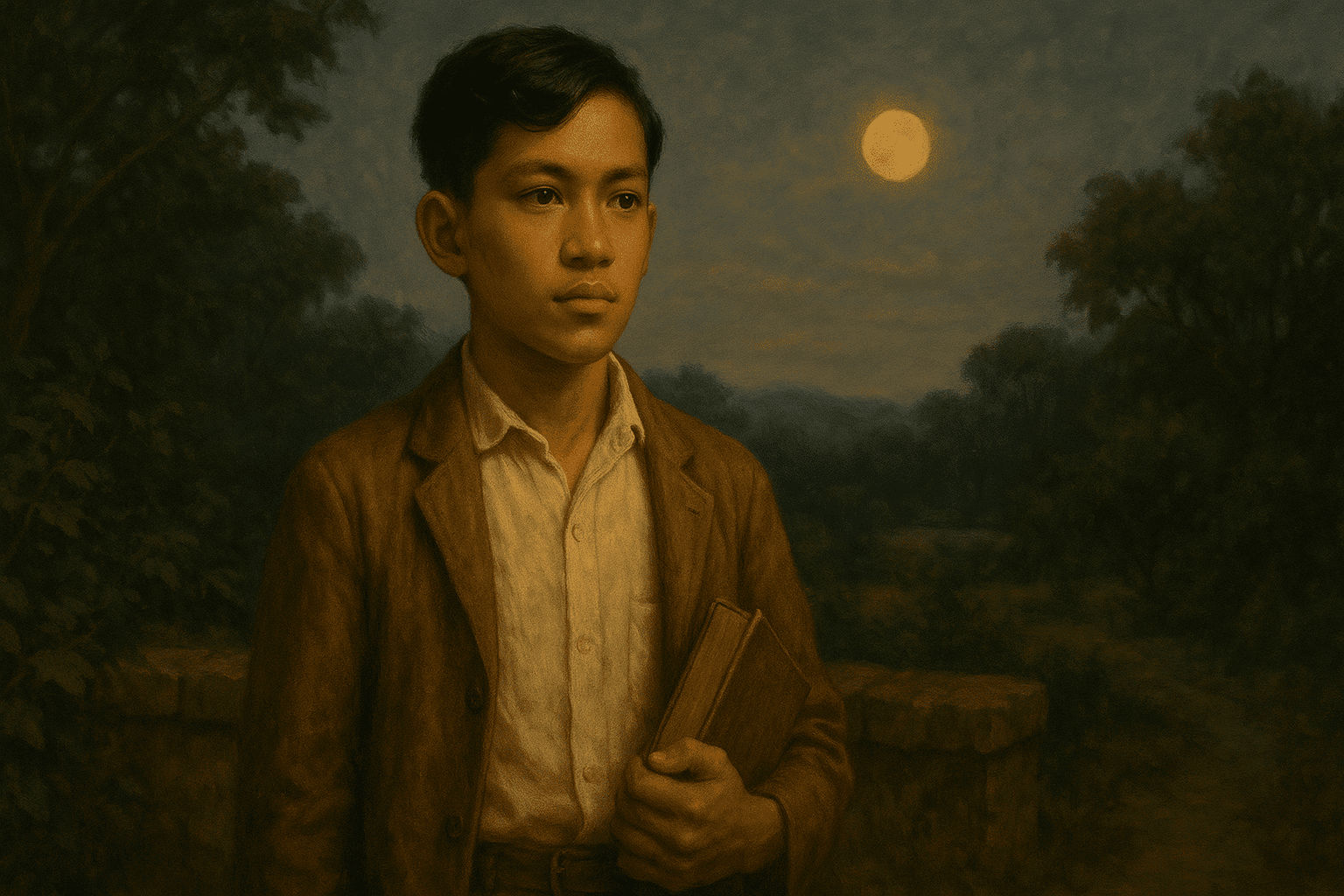
“Sa Kabataang Pilipino” is one of José Rizal’s earliest and most influential poems, written in 1879 when he was just eighteen years old and studying at the University of Santo Tomas. He submitted the poem to an international contest organized by the Sociedad de los Amigos del País, and it won first prize. The work marked one of the first instances in Philippine literature where the Filipino youth were addressed directly as the hope and future of the nation.
At the time Rizal wrote this poem, the Philippines remained under Spanish colonial rule. Education was limited, the press was controlled, and critical thinking was discouraged. Yet in this environment, Rizal insisted that the youth possessed the power, imagination, and responsibility to uplift their motherland. The poem illustrates his increasing awareness that national progress would require enlightened, educated young Filipinos capable of pursuing knowledge, justice, and reform.
“Sa Kabataang Pilipino” is important not only because of its historical context but also because it introduced the idea of the Filipino youth as active nation-builders. Generations of students have memorized its verses, and it remains a central text in understanding Rizal’s early nationalist awakening.
Full Poem: Sa Kabataang Pilipino
Itaas ang iyong
Malinis na noo
Sa araw na ito,
Kabataang Pilipino!
Igilas mo na rin ang kumikinang mong
Mayamang sanghaya
Magandang pag-asa ng Bayan kong Mutya!
Makapangyarihang wani’y lumilipad,
At binibigyang ka ng muning mataas,
Na maitutulad ng ganap na lakas,
Mabilis na hangin, sa kanyang paglipad,
Malinis na diwa, sa likmuang hangad.
Ikaw ay bumaba
Na taglay ang ilaw
Ng sining at agham
Sa paglalabanan,
Bunying kabataan,
At iyong kalagiun ang gapos mong iyang
Tanikalang bakal na kinatalian
Ng matulain mong waning kinagisnan.
Ikaw na lagi nang pataas nag lipad,
Sa pakpak ng iyong Mayamang pangarap,
Na iyong Makita sa Ilimpong ulap
Ang lalong matamis
Na mag tulaing pinakananais,
Ng higit ang sarap
Kaysa “ambrosia” at “nectar” na awagas
Ng mga bulaklak.
Ikaw na may tinig
Na buhat sa langit,
Kaagaw sa tamis
Na kay Filomenang Malinis na hiomig,
Sa gabing tahimik
Ay pinaparam mo ang sa taong sakit,
Ikaw, na ang batong sukdulan ng tigas
Sa lakas ng iyong diwa’y nagagawad
Ng buhay at gilas,
At ang alaalang makislap
Ay nabibigayan ng kamay mong masikap
Ng buhay na walang masasabing wakes.
At ikaw, na siyang
Sa may iba’t ibang
Balani ni Febong kay Apelas mahal,
Gayundin sa lambong ng katalagahan,
Na siayng sa guhit ng pinsel mong tanga’y
Nakapaglilipat sa kayong alinman;
Hayo na’y tumakbo! Sapagka’t ang banal
Na ningas ng wani’y nais maputungan
Kayong naglalama’y,
At maipamansag ng tambuling tangan,
Saan man humanggan,
Ang ngalan ng tao, sa di matulusang
Lawak ng palibot na nakasasaklaw.
Malwalhating araw,
Ito, Pilipinas, sa lupang tuntungan!
Ang Lumikha’y dapat na pasalamatan,
Dahilan sa kanyang mapagmahal,
Na ikaw’y pahatdan.
Analysis
Rizal’s “Sa Kabataang Pilipino” captures the young patriot’s belief that national transformation begins with the empowerment of the youth. Although written during his formative years, the poem already displays many of the themes that would define his later works: education, dignity, progress, enlightenment, and the responsibility of citizens to uplift the nation.
The poem opens with a call to action. Rizal urges the youth to lift their heads high toward the light of knowledge and the promise of a brighter future. This act of looking upward conveys confidence, ambition, and a refusal to remain oppressed. It represents intellectual awakening. Rizal believed that ignorance kept the nation in chains, and enlightenment would break them.
Throughout the poem, he repeatedly describes the youth as a source of renewal. Their minds are fresh, their spirits strong, and their ideals pure. These qualities give them the capacity to reshape the country that older generations had grown accustomed to seeing through the lens of fear or resignation. Rizal believed that where adults might compromise, the youth could imagine radical change.
A significant theme in the poem is the connection between personal excellence and national progress. Rizal does not merely flatter the young; he demands that they cultivate their talents, intelligence, and moral character. For him, patriotism includes striving for one’s best self, because individual growth contributes to collective advancement. This mirrors the emphasis on education seen later in Noli Me Tangere, El Filibusterismo, and many of his essays.
There is also a quiet but powerful undercurrent of nationalism. Rizal wrote at a time when the word “Filipino” was not commonly used to refer to all island inhabitants; it was a term originally reserved for Spaniards born in the Philippines. By directing his message explicitly to the “Kabataang Pilipino,” he both affirms a shared identity and assigns responsibility to the youth to nurture this evolving national consciousness. This early expression of inclusive patriotism would later become foundational to the Propaganda Movement.
Another key element of the poem is hope. Rizal saw the youth as seeds from which the future Philippines would grow. He entrusts to them the writing of the nation’s destiny, hinting at revolution not through violence but through renewal of character, education, and civic courage. The poem foreshadows Rizal’s own path as a reformist intellectual who sought freedom through knowledge and truth.
In modern readings, “Sa Kabataang Pilipino” remains strikingly relevant. The themes of education, empowerment, and nation-building resonate strongly in a country where young people continue to be a majority. Whether in politics, technology, the arts, or social advocacy, the Filipino youth still shape the nation’s direction, echoing the ideals Rizal imagined nearly 150 years ago.
In many ways, this poem is Rizal’s earliest love letter to the Filipino youth. More than inspiration, it is a challenge: to dare, to create, to think critically, and to rise above complacency. Its power lies in its unwavering faith that every generation of young Filipinos carries within them the flame that can illuminate the nation’s path.