Quick Summary
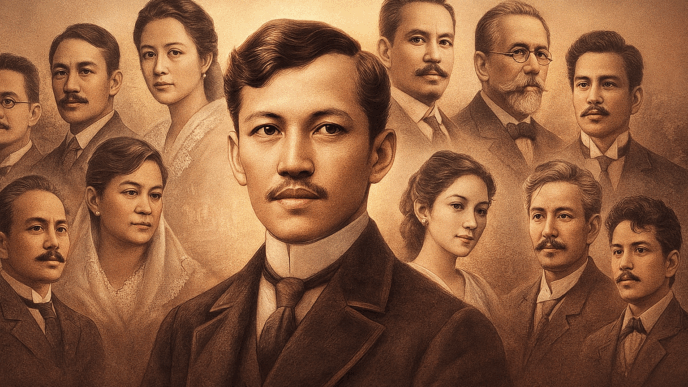
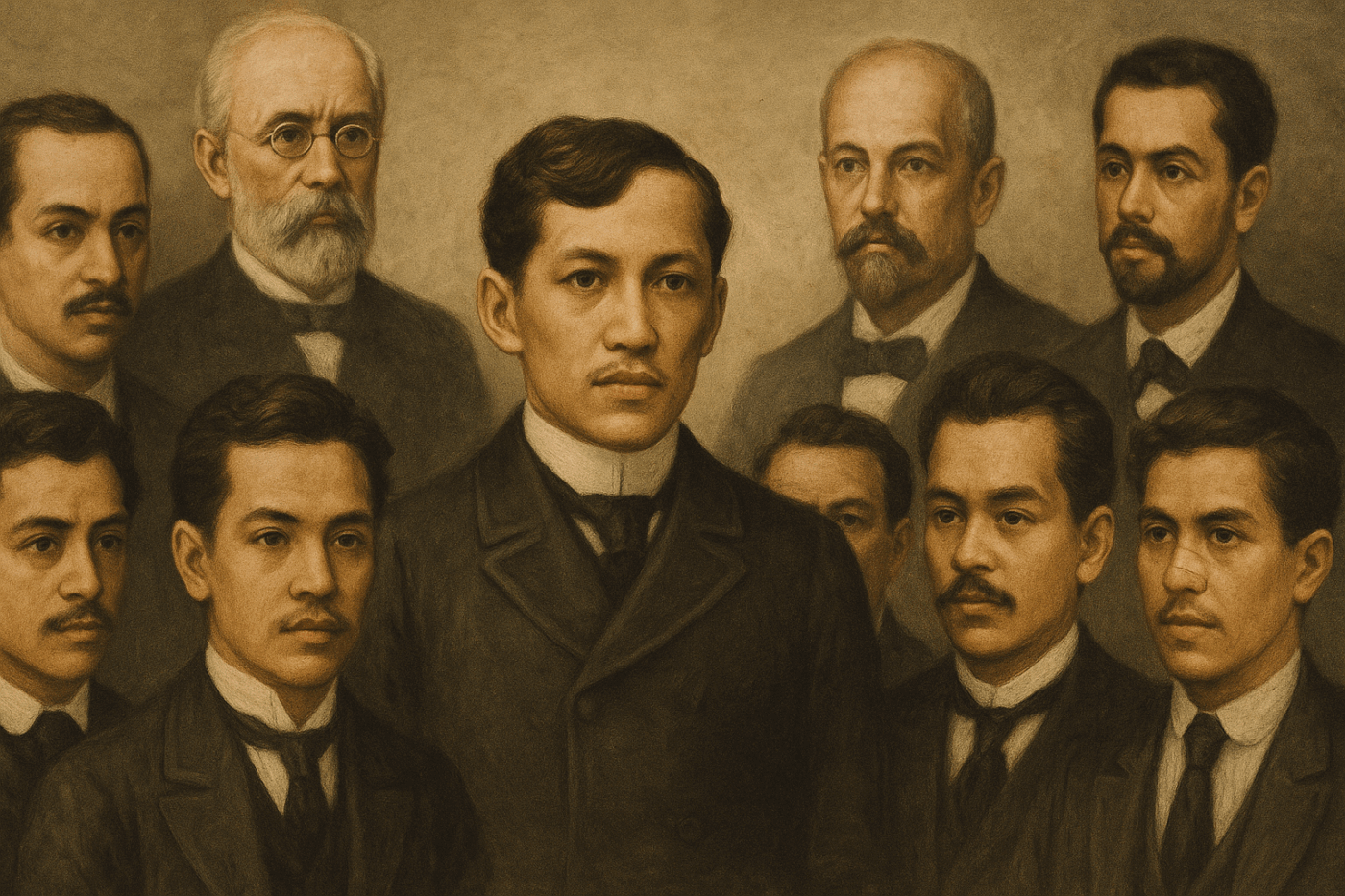
Rizal moved through a world of friendships, intellectual partnerships, political alliances, and even rivalries. These relationships shaped his ideas, expanded his horizons, and influenced the direction of the Propaganda Movement and the nation’s struggle for reform.
Introduction
Rizal’s story is often told as if he stood alone — a solitary thinker whose brilliance carried him from Calamba to the great intellectual centers of Europe. Yet Rizal’s life was woven from a rich tapestry of friendships, correspondences, collaborations, and ideological tensions. He learned from peers, debated with rivals, and drew strength from allies who shared his hopes for the Philippines.
These relationships reveal a more human Rizal: a friend capable of deep loyalty, a colleague who inspired and challenged others, and a figure whose ideas evolved through dialogue and disagreement. To understand Rizal fully, one must understand the people who walked alongside him, argued with him, shaped him, and ultimately helped him shape the nation’s destiny.
Early Friends: Companions in Youth and Study
Rizal’s earliest friendships were formed in Calamba, Biñan, and Manila. In Ateneo Municipal, his circle included boys who admired his quiet intelligence and artistic talent. These friendships deepened his interest in poetry, science, and athletics. Among them were figures like Francisco Paula Sanchez, his teacher who became a mentor, and several classmates who recognized his discipline and determination.
These early friendships taught Rizal the value of collaboration and humility. Even as he excelled, he remained approachable, learning as much from the environment around him as from formal instruction.
Companions in Europe: The Reformist Brotherhood
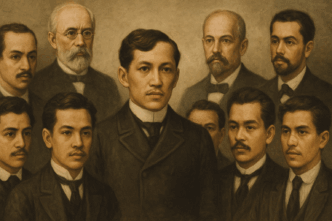
Rizal’s most influential friendships formed in Europe during the Propaganda Movement. Far from home, Filipino expatriates forged bonds rooted in shared struggle.
Marcelo H. del Pilar, a powerful writer and political thinker, became both friend and ideological counterweight. Del Pilar’s fiery journalism contrasted with Rizal’s measured analysis, yet they shared the same goal: reform and dignity for the Filipino people. Their correspondence is marked by mutual respect, even during periods of tension.
Graciano López Jaena, the founder and editor of La Solidaridad, brought charisma and humor to the reformist circle. His lively spirit complemented Rizal’s more serious demeanor. Rizal admired Jaena’s talent but also encouraged discipline at moments when Jaena’s enthusiasm outpaced practicality.
Antonio Luna, younger and fiercely intelligent, challenged Rizal in debates but also revered him. Their friendship was defined by spirited discussions on science, nationalism, and European thought. Luna’s passion and Rizal’s calm reasoning produced a productive intellectual partnership.
Félix Hidalgo and Juan Luna, celebrated painters, were part of Rizal’s artistic and cultural circle. Their achievements in European art competitions strengthened the expatriate community’s morale, and their studios became spaces for conversation about identity, culture, and colonial injustice.
These friendships were not casual connections. They formed the backbone of a movement that sought to redefine what it meant to be Filipino.
Allies in Reform: Leaders, Thinkers, and Sympathizers
Rizal’s allies extended beyond the Filipino circles. In Spain, liberal thinkers like Dr. Miguel Morayta supported Filipino students and advocated for reforms. European scientists and doctors — Dr. Louis de Wecker, Dr. Otto Becker, Rudolf Virchow — not only trained Rizal but respected him as an equal. Their mentorship validated his intellectual standing and expanded his worldview.
In Paris, Brussels, and Madrid, Rizal also befriended scholars, linguists, and reformists who helped broaden his cultural and political understanding. These relationships enriched his writing, sharpened his reformist strategies, and reminded him that the struggle for justice resonated beyond the Philippines.
Rivals and Ideological Tensions
Not all of Rizal’s relationships were harmonious. His growing influence sometimes sparked friction, especially within the Propaganda Movement.
The most notable rivalry developed between Rizal and Marcelo H. del Pilar as both were considered for the leadership of La Solidaridad. Their rivalry was rooted in personality differences and strategic approaches: del Pilar preferred direct political agitation, while Rizal emphasized long-term moral and educational reform. Despite these tensions, both ultimately stepped back from the dispute, placing the movement’s unity above personal ambition.
Another source of tension was Rizal’s criticism of certain Filipino behaviors abroad — gambling, idleness, factionalism — which some expatriates took personally. For Rizal, moral reform was inseparable from political reform, a stance that occasionally made him unpopular within the expatriate community.
Rizal’s principled positions also brought him into quiet conflict with individuals who sought personal recognition or political advancement through the movement. His insistence on integrity set him apart from those who treated the cause as a stepping stone rather than a responsibility.
Friendships at Home and in Exile
Despite spending years abroad, Rizal maintained deep friendships in the Philippines. Ferdinand Blumentritt, though foreign, was one of Rizal’s most loyal companions. Their correspondence spans hundreds of letters, revealing an intellectual bond built on mutual respect. Blumentritt defended Rizal publicly and admired his scholarship, ethics, and patriotism.
In Dapitan, Rizal developed new friendships with townspeople, students, and even his commanding officer, Captain Ricardo Carnicero. These relationships humanized the exile experience. Students like Jose Aseniero and members of the community saw him not as the famed reformist but as a teacher, doctor, engineer, and friend.
His bond with Josephine Bracken also reflected a more personal, intimate friendship — one that offered support during the most difficult period of his life.
Loyalty Among Revolutionaries
Although Rizal distanced himself from premature revolution, leaders like Andres Bonifacio and Emilio Aguinaldo held him in the highest regard. Bonifacio, in particular, saw him as the intellectual and moral guide of the movement. Their reverence was rooted not in personal meetings but in the power of Rizal’s words and example.
Rizal’s allies in the reform movement became allies in revolution. His name served as a unifying force when factionalism threatened cohesion. Even after his death, his friendships continued to influence the choices and convictions of revolutionary leaders.
Conclusion
Rizal’s circle of friends, associates, rivals, and allies demonstrates that national heroes are shaped not only by their own abilities but by the relationships that challenge, nurture, and refine them. His friendships offered companionship in exile, support during hardship, intellectual stimulation across continents, and emotional grounding during moments of great pressure. His rivals sharpened his ideas, while his allies strengthened his resolve.
These relationships reveal a Rizal who was neither solitary nor unapproachable, but deeply human — someone who debated passionately, cared intensely, and valued the people who walked alongside him. Together, they formed a community whose influence helped shape the future of the Philippines.