Who She Was
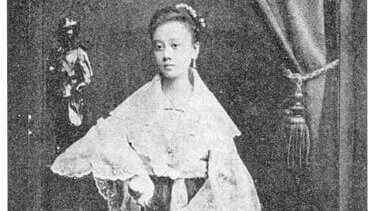
Leonor Rivera was born on April 11, 1867, in Camiling, Tarlac, the daughter of Antonio Rivera and Silvestra Bauzon. Her father was an engineer and a distant relative of Rizal’s — a connection that brought the two families into each other’s orbits during the years when Rizal was studying in Manila. She was educated, musically gifted, and by all accounts possessed of the particular quiet self-possession that tends to leave a lasting impression on people who encounter it.
She was not a public figure. She held no position, published nothing, organized no campaigns. She is known to history almost entirely through her relationship with Rizal — through his letters, his poems, the character in his novel that most people who knew them both recognized immediately as her portrait, and through the single documented detail of her death that has become the most frequently cited fact about her life.
This is the difficulty of writing about Leonor Rivera honestly: the historical record is almost entirely mediated through Rizal’s perspective and Rizal’s work. She left no diary, no essays, no public statements. Her voice survives only in fragments — in the letters she wrote to him, which he kept, and in the reported details of her final hours, which were preserved by others. Reconstructing her as a full person requires acknowledging these limits while taking seriously what the available evidence actually shows.
The Beginning
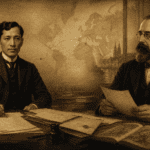
Rizal first encountered Leonor in the early 1880s, when he was studying in Manila and lodging with the Rivera family on Calle Azcarraga in Tondo. He was in his late teens; she was younger still. Their affection developed gradually, as the affections of young people in proximity tend to do — through the ordinary currency of shared space, conversation, and the small attentions that constitute courtship in any era. She played the piano. He read and wrote poems in the evenings.
By the time Rizal left for Spain in May 1882, there was an understanding between them — not a formal engagement, which would have required the involvement of families and social rituals that neither the circumstances nor his immediate departure allowed, but a mutual acknowledgment that their feelings were serious and that they intended to continue. He was twenty years old. She was fourteen.
He wrote to her from Spain. She wrote back. The correspondence, maintained across the length of his European years, is one of the more remarkable features of Rizal’s biography — thousands of miles, years of separation, the growing danger of his public profile, and two people trying to hold a relationship together through letters that took weeks to arrive and were subject to interception.
The Letters and What Happened to Them
Rizal’s letters to Leonor were affectionate, detailed, and illustrated — he sent sketches, drawings, accounts of where he was and what he was seeing. Hers to him were, by his own description, more restrained but genuine. The correspondence was their relationship, sustained across the Atlantic and eventually across years of silence that neither of them initially understood.
The silence had a cause. Leonor’s mother, Silvestra Bauzon Rivera, had become increasingly alarmed by Rizal’s growing notoriety. By the mid-1880s he was a known critic of the colonial administration, his essays were circulating in the reform press, and his novel — when it appeared in 1887 — was immediately banned by the colonial authorities. Having a daughter engaged to a man on the wrong side of the colonial government was a social and potentially legal danger. Silvestra began intercepting Rizal’s letters before they reached Leonor.
Leonor waited. From her perspective, Rizal had simply stopped writing. From his perspective, she had stopped responding. The silence between them was not indifference on either side but the active intervention of a mother who understood — correctly, in purely practical terms — that the relationship had become a liability.
How many letters were intercepted, over how many years, is not precisely known. What is known is that by the time Leonor understood what had happened, her mother had arranged her marriage to someone else.
Charles Kipping and the Marriage of 1890
Charles Henry Kipping was a British engineer working on the Manila-Dagupan railway — the first railway line in the Philippines, completed in 1892. He was respectable, employed, and present. He was not politically dangerous. From Silvestra’s perspective, he was exactly what her daughter needed.
The marriage took place on August 15, 1890. Leonor was twenty-three years old. Multiple accounts, preserved through the testimony of people who were there or who knew the family, describe her as weeping before and during the ceremony. Whether this was grief specifically for Rizal or the more general sorrow of a young woman marrying under pressure is impossible to know with certainty. What the accounts agree on is that she was not happy.
Rizal learned of the marriage while he was in Europe. The news reached him through the correspondence networks that connected the Filipino diaspora, and the effect on him was visible to people around him — a shift in mood, a new weight in his letters. He had known, in some abstract sense, that the silence between them might end this way. Knowing it abstractly and receiving the confirmation were different things.
He did not publicly blame Leonor. He understood, in time, that the letters had been intercepted — that she had waited, as he had waited, and that the marriage had happened because the silence had been manufactured by someone else. This understanding did not undo the fact, but it changed its meaning.
Maria Clara
When Noli Me Tangere was published in 1887 — three years before Leonor’s marriage, while the correspondence between them was still ongoing — it introduced a character named Maria Clara who has become the most discussed female figure in Philippine literary history.
Maria Clara is Crisostomo Ibarra’s great love: beautiful, gentle, educated within the narrow limits of what colonial society permitted, caught between her devotion to Ibarra and the pressures of family, Church, and social expectation. She does not control the circumstances of her own life. She is constrained at every turn by forces larger than her individual will. Her fate — which is tragic, in ways that the novel handles with considerable moral seriousness — is presented not as personal weakness but as the logical outcome of a system designed to prevent women from exercising agency.
Rizal never publicly identified Leonor as Maria Clara’s model. He did not need to. The people who knew both of them recognized the parallel immediately, and the biographical echo has been part of the novel’s reception almost from the moment of publication. The connection is real but not simple — Maria Clara is a literary creation, more fully realized in some ways than the historical Leonor and more schematic in others. She is a character designed to make an argument about what colonial society does to women, and Leonor was a real person who happened to embody, in her actual life, some of the conditions that argument was about.
The most honest way to state the relationship is this: Leonor Rivera was one of the primary human sources from which Rizal drew the character of Maria Clara, and the character’s tragedy was in part a literary working-through of what he saw happening to someone he loved under a system he was trying to dismantle.
The Last Years
Leonor’s marriage to Kipping produced two children. She remained in the Philippines while her husband worked on railway construction. The marriage was, by the accounts that survive, dutiful — a life organized around the obligations of a colonial-era household rather than any evident happiness.
Her health deteriorated. She had been described as delicate even before the marriage; the years that followed did not improve her constitution. She died on August 28, 1893, three years after the wedding, at the age of twenty-six. The cause was tuberculosis, which was endemic in the Philippines at the time and particularly lethal for people whose circumstances offered little resistance to it.
The reported detail of her death — that she asked for Rizal’s letters to be placed in her coffin with her — has become the most frequently cited fact about her life, and it is easy to understand why. It is a single gesture that compresses an entire story: the years of waiting, the intercepted letters, the marriage she had not chosen, and the love that none of it had entirely extinguished.
Whether this actually happened cannot be confirmed. The sources are too sparse and too far removed. It has been reported consistently enough across sources that it cannot simply be dismissed as invention. What matters, in terms of what it tells us about her, is the emotional truth it encodes: that she had not forgotten him, and that she wanted some record of what they had been to each other to accompany her.
Her Place in the Story
Leonor Rivera is one of the most significant people in Rizal’s life, and one of the least fully recovered by history. The difficulty is partly structural — she left no public record of her own, and the sources that document her are almost entirely accounts of how she affected someone else — and partly a function of the tendency to treat her primarily as a literary symbol rather than a historical person.
She was not Maria Clara. She was the person from whom a writer drew material for a character, and the difference matters. Maria Clara’s tragedy is organized and purposeful, shaped by an author with an argument to make. Leonor’s life was disorganized in the way that actual lives are — shaped by a mother’s fear, a man’s political commitments, a disease, and a railway engineer who happened to be available at the right moment.
What the available evidence shows is a person who sustained a genuine attachment across a decade of enforced silence, who married under pressure and was unhappy about it, who died young under circumstances that colonial-era medicine could not address, and who asked, at the end, that the letters she had been prevented from receiving in the years that mattered be buried with her.
That is not a symbol. That is a life.