Quick Summary
Jose Rizal’s childhood in Calamba and his early education in Calamba and Biñan shaped his intellect, values, and awareness of injustice. Guided by his family, teachers, and the environment around him, these formative years laid the foundation for the reformist and writer he would later become.
Early Life in Calamba
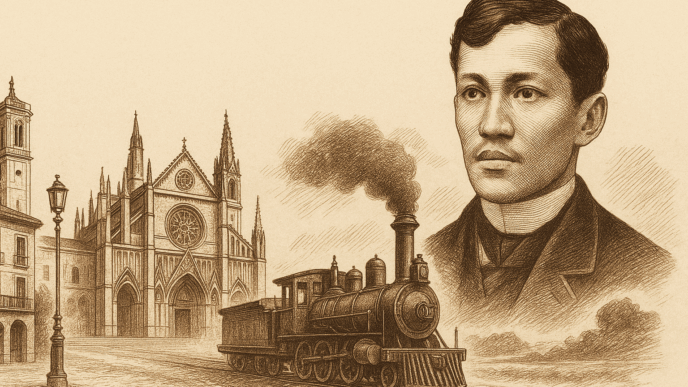
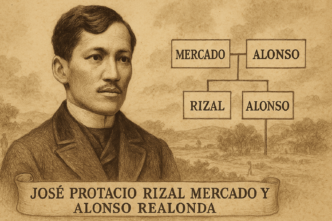
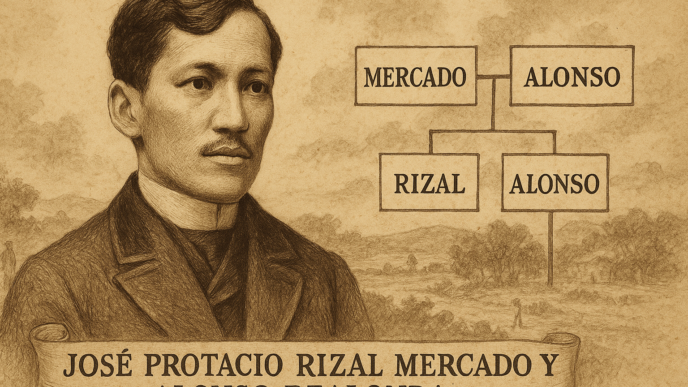
Jose Rizal was born on June 19, 1861, in Calamba, Laguna, the seventh of eleven children of Francisco Mercado and Teodora Alonso. His childhood was shaped by the atmosphere of a home where hard work, faith, learning, and compassion were daily practice. Although the Mercado family enjoyed comfort and education, they lived in a society marked by inequality and colonial control. This contrast sharpened the young Rizal’s curiosity and sense of justice.
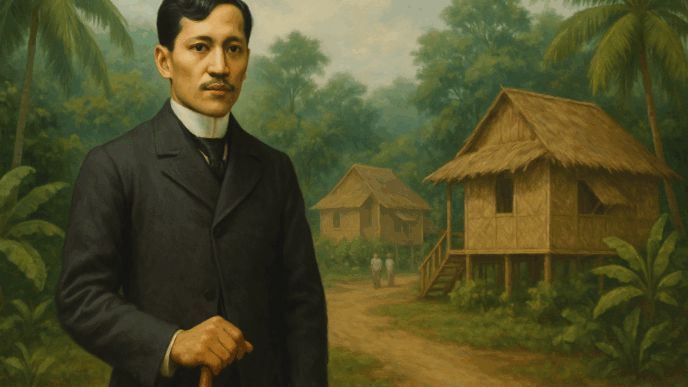
Calamba, with its fertile fields, peaceful lake, and distant presence of Mount Makiling, served as his first classroom. Its landscapes appeared in his later writings, reflecting how deeply the town shaped his imagination. From the rhythms of agricultural life to the quiet concerns of tenant-farmers, he absorbed more than a child usually sees at his age. These early impressions planted the seeds of the social awareness that would define his work as a reformist.
Growing Up in a Nurturing Household
The Mercado home was filled with the values that would guide Rizal throughout his life. His father, Francisco, managed their lands with discipline and fairness. He modeled integrity and self-restraint, teaching his son the dignity of work and the importance of moral character.
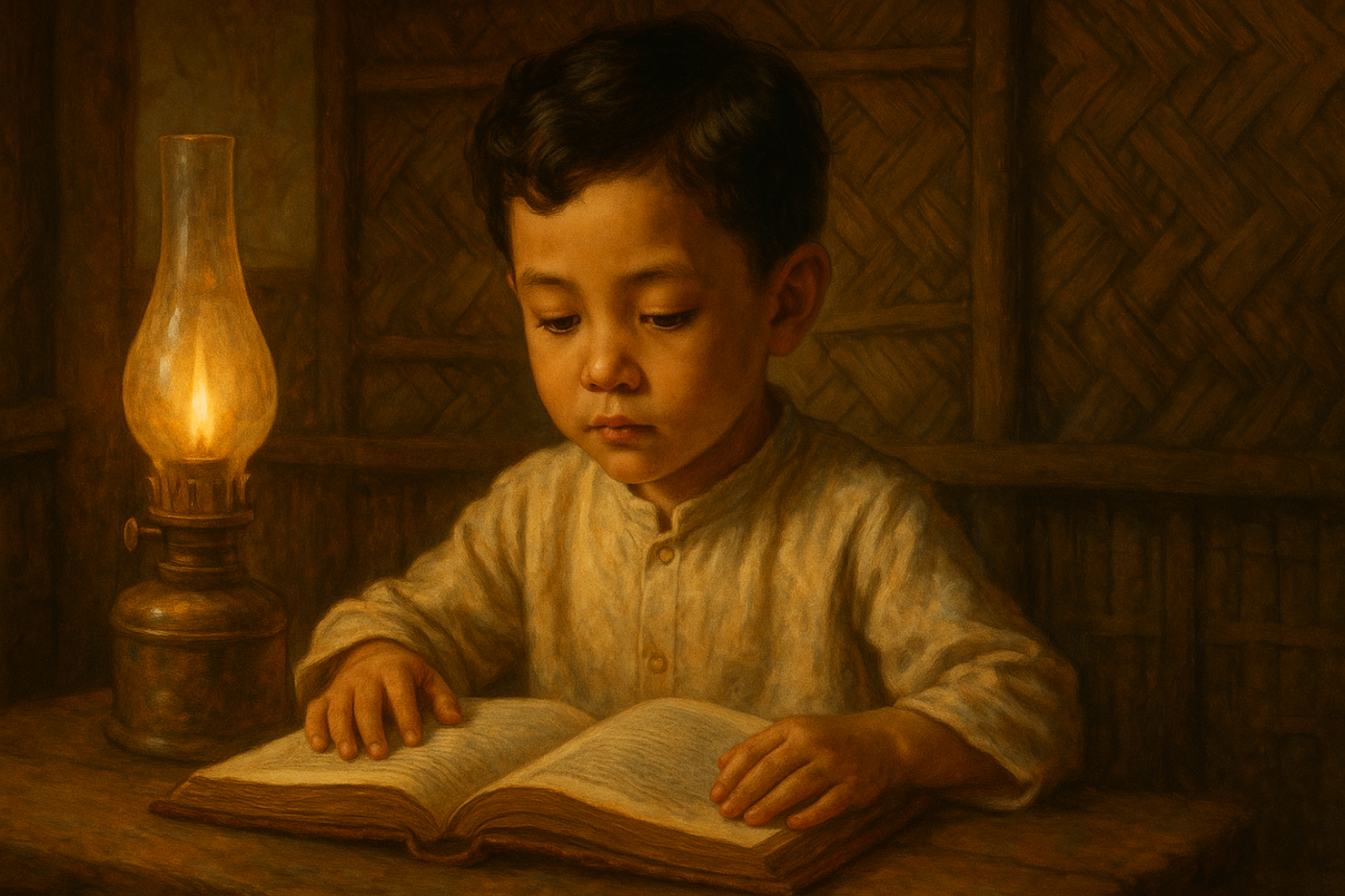
His mother, Teodora, was the greatest influence on his early mind and soul. Educated, principled, and deeply religious, she served as his first teacher. From her, he learned to read and appreciate stories. She nurtured his early love for literature and encouraged his natural curiosity. Her teachings combined intellect with conscience. Many of Rizal’s later beliefs about justice and compassion came from her example.
Home life was also enriched by a strong sense of family solidarity. Paciano, Rizal’s older brother, exposed him to progressive ideas and the early stirrings of reform in the Philippines. Conversations in the household flowed easily between daily matters and social concerns. This environment allowed Rizal to grow with awareness rather than innocence.
Calamba as a Living Classroom
The natural beauty and social tensions of Calamba provided young Rizal with a wide range of experiences. The scenery inspired his artistic imagination. The lives of farmers and tenants stirred his sensitivity to inequality. He listened quietly to adult discussions about the disputes between the town’s families and the Dominican hacienda owners. These conversations revealed the painful realities of colonial rule.
Even as a child, Rizal developed the habit of observing and reflecting. This early practice of paying attention allowed him to understand the world with depth beyond his years. Later, the grievances and conflicts he witnessed in Calamba became the background of characters and scenes in his novels.
Early Home Education
Rizal’s education began at home, guided by Teodora. She taught him prayers, the alphabet, and stories that encouraged imagination. His early reading materials included children’s books, folk tales, and simple stories with moral lessons. He quickly developed strong writing and drawing skills.
This early foundation made him an unusually advanced learner. He read with fluency, remembered details with precision, and displayed a talent for storytelling. His mother recognized his abilities and encouraged him gently, without forcing academic pressure. This nurturing environment allowed his intellect to grow naturally.
Formal Schooling in Calamba
A small private school in Calamba marked Rizal’s first experience with formal education outside his home. It was simple and modest, but it gave structure to his learning. Here, he learned the basics of reading, writing, arithmetic, and Catholic instruction.
Rizal’s early exposure to formal schooling introduced him to discipline and routine. Though still young, he approached learning with seriousness. His teachers recognized his intelligence and eagerness to understand.
Education in Biñan under Maestro Justiniano
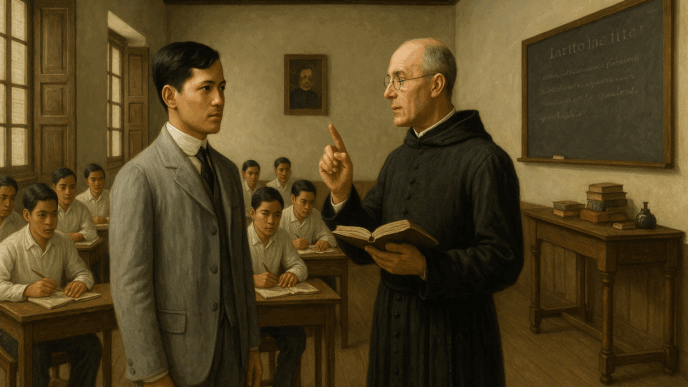
At nine years old, Rizal was sent to Biñan to continue his education under Maestro Justiniano Aquino Cruz. This move was important. It exposed him to a competitive academic environment and broadened his experiences beyond Calamba.
In Biñan, Rizal studied Spanish, Latin, writing, and the basics of geometry and art. He observed the dynamics between students, including competition, bullying, and friendships. One of his well-known memories includes a conflict with a classmate named Pedro, which taught him resilience and dignity.
Despite being younger and smaller than many of his classmates, Rizal excelled. He quickly earned the respect of Maestro Justiniano through diligence and natural ability. He also explored his growing interest in drawing and sculpture, creating small sketches and carvings that hinted at his future artistic skill.
Notable Childhood Experiences
Several events during these years left lasting impressions on Rizal. The most influential included:
- The arrest and imprisonment of his mother, which marked his first deep sorrow and sharpened his awareness of injustice.
- Encounters with discrimination in Biñan, which showed him how social and racial hierarchies operated in colonial society.
- The death of his sister Concha, a tragedy that awakened his emotional sensitivity and later influenced his poetry.
These moments shaped his view of suffering, courage, and compassion.
Return to Calamba and Academic Testing
When Rizal returned to Calamba from Biñan, he was prepared to move beyond basic schooling. Before entering formal Manila education, he demonstrated his abilities through examinations. His performance impressed local instructors and showed that he had surpassed many expected standards for his age.
This transitional period strengthened his confidence and prepared him for the challenges of more advanced study.
Transition to Higher Studies
Rizal’s path toward higher education was influenced by two major forces:
- Paciano’s guidance, shaped by his relationship with Father Jose Burgos
- The family’s commitment to education despite financial and political risks
Paciano strongly encouraged Rizal to pursue advanced studies in Manila, believing that education was both a personal path for Rizal and a national duty.
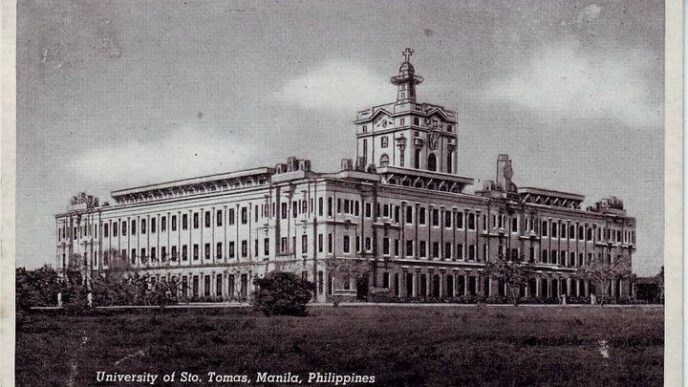
In 1877, Rizal entered the Ateneo Municipal de Manila. His years there would further shape his character, sharpen his intellect, and cultivate the disciplined study habits that defined his later achievements.
Seeds of a Future Reformist
By the time Rizal left Calamba for Manila, much of his identity had already taken root. He carried with him the lessons of his parents, the strength of his family, the memories of Calamba’s landscapes, and the social realities he witnessed as a child.
His early exposure to reading, observation, and reflection prepared him for a life shaped by ideas. His experiences in Biñan and the influence of his first teachers built a foundation for the linguistic, artistic, and intellectual gifts he later displayed.
Rizal’s early life and education did not merely prepare him academically. They molded his character. They taught him empathy, discipline, curiosity, and a strong sense of justice. All these qualities would eventually shape the reformist who awakened the Philippine nation.
To read Rizal’s full life story, see Jose Rizal: A Complete Biography.