Origins
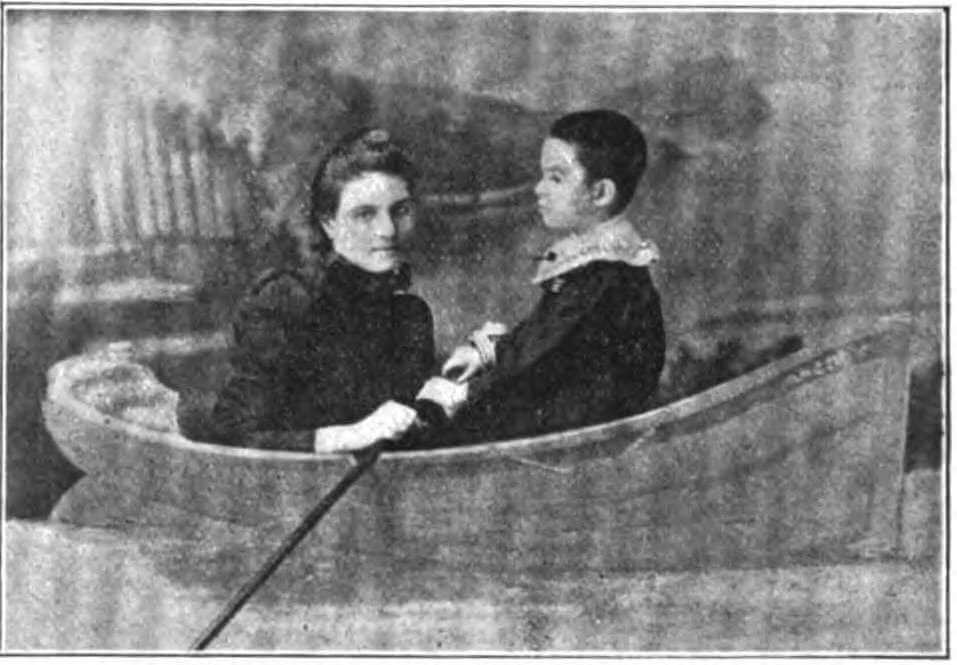
Josephine Leopoldine Bracken was born in Hong Kong on August 9, 1876, to Irish parents. Her mother died shortly after her birth, and she was taken in by George Taufer, an American engineer who had been living in Asia for years and who raised her as his own daughter. She grew up in the expatriate world of colonial Hong Kong — English-speaking, Catholic, accustomed to the particular floating quality of life among people who are always somewhere other than where they started.
She was eighteen years old when she arrived in Dapitan. She had traveled with Taufer from Hong Kong through Macau and Manila, following the advice of someone who had heard of a Filipino doctor exiled in Mindanao who had trained as an ophthalmologist in Europe and who might be able to treat Taufer’s deteriorating eyesight. She had not heard of José Rizal. She had not read his novels. She arrived as the daughter of a patient, which is an ordinary enough way to enter a doctor’s life, and an extraordinary way to enter history.
Dapitan
Rizal had been in exile in Dapitan since July 1892. By early 1895, when Josephine and Taufer arrived, he had built a small estate in the coastal village of Talisay — a house, a school for the local boys, a small clinic, a farm, a water system. He had been collecting specimens for the natural history museums of Europe, corresponding with scientists in Germany and Austria, treating patients with eye conditions from the surrounding region, and generally making the best of an exile that the colonial government had intended as a form of slow suffocation.
He examined Taufer and determined that the condition was beyond what he could treat in Dapitan — glaucoma or a similar degenerative disease that required surgical intervention unavailable in Mindanao. He told Taufer this honestly. Taufer stayed anyway, partly because his condition made travel difficult and partly, by most accounts, because he had begun to suspect what was developing between his daughter and the doctor.
What developed was straightforward and rapid. Rizal was thirty-three years old, living in enforced isolation, and had not been in a serious relationship since Leonor Rivera’s marriage to Charles Kipping five years earlier. Josephine was eighteen, spirited, genuinely warm, and entirely unlike anyone else in Dapitan. By the accounts of people who observed them during this period, they fell in love with the uncomplicated directness of people who have not been expecting it.
Taufer opposed the relationship. He attempted to leave Dapitan, became too ill to manage the journey alone, and was effectively stranded — a situation that generated considerable tension and that has been interpreted differently by different historians, some of whom suggest Taufer was manipulated into staying and others of whom take a more charitable view of the circumstances. What is clear is that Taufer eventually returned to Hong Kong without Josephine, who remained in Dapitan.
The Question of Marriage
Rizal wanted to marry Josephine in a Catholic ceremony. This was not a casual preference — he was a man who took formal commitments seriously, and he was aware that living with Josephine without marriage created a social situation that could be used against both of them. He wrote to the Jesuit priests in Dapitan requesting permission for a church wedding.
The priests refused. Their condition for performing the ceremony was that Rizal retract his public criticism of the religious orders — the criticism that ran through his novels, his essays, and his public statements, the criticism that was in fact the central intellectual project of his adult life. He could not accept this condition without negating everything he had argued for the preceding decade. He did not accept it.
What followed is one of the more disputed details of Rizal’s biography. The two entered into some form of union — described variously in the sources as a civil marriage, a common-law arrangement, or a private ceremony before God — the precise nature of which has been debated by historians, Catholic scholars, and Philippine nationalists for more than a century. The debate is not merely academic. The question of whether Rizal died married or unmarried, and married to whom, has been tangled up with questions about his supposed deathbed retraction, his relationship to the Church, and the contested memory of a man whose life has been subject to enormous amounts of ideological investment.
What is not disputed is that they lived together as husband and wife, that Rizal introduced her to visitors as his wife, and that he addressed her with the affection and care that the word implies.
The Child
Josephine became pregnant in Dapitan. The pregnancy ended badly — she went into premature labor, and the child, a boy, was born too early to survive. Rizal named him Francisco, after his own father. He buried the child himself.
The loss was devastating to both of them. Rizal wrote about it to Blumentritt in terms that make clear the depth of the grief. Josephine recovered slowly. The experience, by every account, drew them closer rather than pulling them apart — shared grief tends to operate that way, when the relationship underneath it is solid.
Manila, Fort Santiago, and the Last Night
When Rizal was granted permission to travel to Cuba as a volunteer military doctor in 1896, Josephine accompanied him as far as Manila. When he was arrested in the Mediterranean and brought back to Manila under arrest, she followed the case from the outside — attempting repeatedly to gain access to Fort Santiago, being refused, persisting, eventually being permitted a final visit.
The account of that final visit — December 29, 1896, the night before the execution — is one of the most documented and most contested passages in Rizal’s biography. A Catholic priest, Father Balaguer, performed what he described as a marriage ceremony in the cell. Rizal, by Father Balaguer’s account, agreed to a retraction of his anti-Church positions as a condition of the sacrament. The retraction document that subsequently circulated has been disputed by Rizal scholars for more than a century — disputed on grounds of authenticity, on grounds of what Rizal could have meant by signing it if he did, and on grounds of the political interests that various parties had in establishing or denying that the retraction occurred.
What is not in dispute is that Josephine was there. That they spent what time they were permitted together. That she was present in the hours before his execution in a way that Leonor Rivera, who had been dead for three years, could not be.
On the morning of December 30, 1896, she was among the crowd at Bagumbayan when Rizal was shot. She tried to reach his body afterward and was prevented by the guards. She was nineteen years old.
After
The period of Josephine’s life after Rizal’s death is less well documented than the period before it, and the documentation that exists is not always consistent. What the sources agree on is that she did not retreat into private grief. She joined the Philippine Revolution in Cavite in the months following the execution — serving in capacities that various sources describe as courier, nurse, and morale support for the Katipuneros fighting in the field. Whether this was driven by a genuine commitment to the cause Rizal had died for, by the practical need to be somewhere and doing something, or by both simultaneously is impossible to determine from the outside.
She married Vicente Abad in 1898, a fact that has been used by critics to question the depth of her attachment to Rizal and by defenders to argue that a young woman who had lost the man she loved and was living through a revolution had understandable reasons for seeking stability. She spent time in Hong Kong in the years that followed. She died in 1902, in her mid-twenties — young enough that the circumstances of her death, like much of her life, left an incomplete record.
The Controversy
Josephine Bracken has been a contested figure in Philippine historiography almost from the moment of Rizal’s execution. Early critics questioned her motives — some suggesting she was an agent of the Spanish authorities, others questioning whether she genuinely loved Rizal or was pursuing some combination of adventure and social position. These accusations were made by people with ideological stakes in the question and have not been sustained by the historical evidence that has subsequently emerged.
The more serious and persistent controversy surrounds the deathbed retraction — specifically, whether Josephine’s presence in the cell on December 29 was connected to the conditions under which the retraction was allegedly signed. Father Balaguer’s account presents the marriage ceremony and the retraction as linked, which has led some historians to suggest that Josephine’s access to Rizal was conditional on his agreement to the Church’s terms. Others reject this reading as speculative. The documentary record is ambiguous enough to sustain both positions, which is why the debate has continued for more than a century.
What the controversy should not obscure is the simpler human fact: a nineteen-year-old woman traveled from Hong Kong to the Philippines following her stepfather’s medical needs, fell in love with a man under political sentence, stayed with him through exile and arrest and imprisonment, watched him be shot, and spent the remaining years of her short life in the country where it had all happened. The motivations for this are not particularly mysterious. People stay for love. People stay because leaving feels like abandonment. People stay because the place has become, through the weight of what has happened there, the only place that makes sense.
What She Was
Josephine Bracken was not a political figure. She was not an intellectual. She did not shape the reform movement or the revolution in ways that can be cleanly attributed to her. What she was, in the years that matter most to the story, was present — genuinely, consistently, at considerable personal cost, in the life of a man whom the colonial government was doing its best to isolate and destroy.
That presence is not nothing. In the specific circumstances of Rizal’s exile and imprisonment, it was in fact one of the more remarkable things anyone did for him. The people who could have visited Fort Santiago mostly did not. The woman who had no political standing, no family connection to leverage, no institutional protection, and no obvious reason other than love to keep showing up — kept showing up.
She was twenty years old when he died. She outlived him by six years. She left no memoir, no published account of what those years in Dapitan and Manila and Cavite had been. The historical record preserves her primarily through the accounts of others, filtered through the interests and assumptions of people who found her convenient for various arguments.
The most honest thing that can be said about Josephine Bracken is also the simplest: she was there, and being there cost her something, and she stayed anyway.
Read next: Rizal’s Trial and Execution — the four-day military trial, the last night at Fort Santiago, and the morning at Bagumbayan.