



Quick Summary
“Song of the Wanderer” is Jose Rizal’s reflective poem about exile, longing, and the sacrifices demanded by love of country. Written during his years away from home, it captures the emotional cost of wandering and the hope that someday he might return to the land he loved.
Background
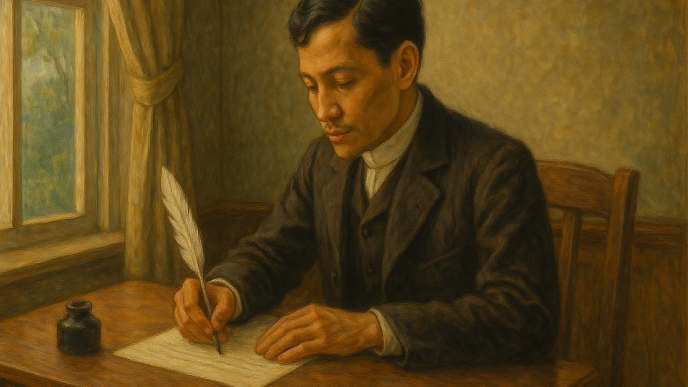
“Song of the Wanderer” (“Canto del Viajero”) is one of Jose Rizal’s most heartfelt poems on exile and homesickness. Written during his years in Europe, the poem reveals the inner turmoil behind his intellectual brilliance and public achievements. While Rizal was admired abroad for his scholarship, artistry, and leadership, he lived with a constant ache brought by distance from the Philippines.
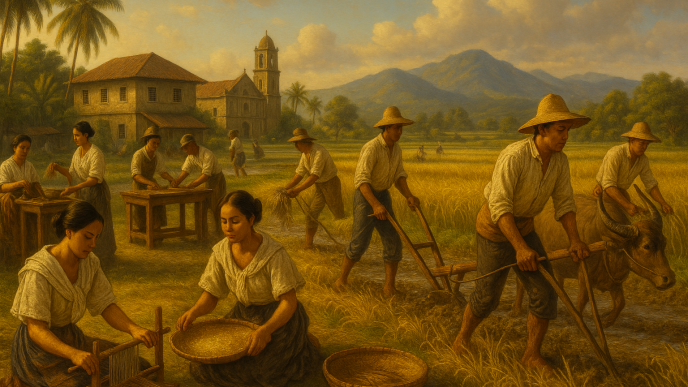
This poem belongs to the period when Rizal was deeply immersed in the Propaganda Movement. He moved from Spain to France, Germany, and England, expanding his intellectual horizons and honing his vision for reform. Yet beneath this blossoming was a persistent longing for the simplicity of home: the warmth of family, the familiar landscapes of Calamba, and the quiet dignity of Filipino life.
“Song of the Wanderer” captures the dual reality of his exile. On one hand, travel broadened his perspective and equipped him to fight injustice through knowledge. On the other, the further he traveled, the more he felt the weight of separation—and the growing certainty that freedom for his people would come at great personal cost. The poem feels almost prophetic, written by a man who sensed that the path he had chosen might keep him forever away from home.
For many readers, this poem symbolizes the emotional journey of every Filipino abroad—an enduring reminder that love for the homeland persists even across oceans.
Full Poem: Song of the Wanderer
Dry leaf that flies at random
till it’s seized by a wind from above:
so lives on earth the wanderer,
without north, without soul, without country or love!
Anxious, he seeks joy everywhere
and joy eludes him and flees,
a vain shadow that mocks his yearning
and for which he sails the seas.
Impelled by a hand invisible,
he shall wander from place to place;
memories shall keep him company
of loved ones, of happy days.
A tomb perhaps in the desert,
a sweet refuge, he shall discover,
by his country and the world forgotten
Rest quiet: the torment is over.
And they envy the hapless wanderer
as across the earth he persists!
Ah, they know not of the emptiness
in his soul, where no love exists.
The pilgrim shall return to his country,
shall return perhaps to his shore;
and shall find only ice and ruin,
perished loves, and graves nothing more.
Begone, wanderer! In your own country,
a stranger now and alone!
Let the others sing of loving,
who are happy but you, begone!
Begone, wanderer! Look not behind you
nor grieve as you leave again.
Begone, wanderer: stifle your sorrows!
the world laughs at another’s pain.
Analysis
“Song of the Wanderer” reveals the emotional landscape of Rizal’s exile — an aspect sometimes overshadowed by his political accomplishments. Though outwardly confident and admired across Europe, Rizal lived with a growing burden: the knowledge that his mission for his country could cost him the comfort of home, the safety of family, and the ordinary joys of youth.
The poem reflects a bittersweet longing. Its imagery of seas, winds, and distant roads expresses the loneliness of a man compelled to leave everything familiar behind. The figure of the wanderer is both literal and symbolic: Rizal was a traveler, but he was also searching for a path toward national dignity. His journey was not guided by adventure alone, but by purpose, responsibility, and the moral force of an awakening Filipino identity.
One of the central tensions in the poem is the contrast between the vastness of the world and the intimacy of memory. Even as Rizal travels across continents, his thoughts return to “the loves and hopes” of home — a line that captures both personal affection and patriotic devotion. The wanderer’s heart remains anchored to the Philippines, a land not yet free, but loved beyond measure.
The poem also reveals the pain of displacement. “Foreign lands are never home” speaks not only to Rizal’s own experience but to that of countless Filipinos who have lived or worked abroad. The sense of being “elsewhere” never fully fades; the heart remains tethered to its origin.
The final stanza offers an image of conditional return: Rizal envisions coming home “when storms are gone, when truth and freedom crown the land.” This reveals his deep belief that personal happiness must yield to the demands of justice. He knew that returning home before the country was ready for reform would put everything at risk. Ultimately, when he did return, it was not to safety but to martyrdom — a fate that gives this poem a haunting resonance.
Today, “Song of the Wanderer” stands as a timeless reflection on the sacrifices required by duty. It speaks to diasporic longing, patriotic devotion, and the quiet ache of being far from the land that shaped one’s soul. For many Filipinos, the poem remains a companion — an emotional map of what it means to love a homeland from afar.





when did rizal wrote this poem? what is the possible inspiration of this poem?