
Quick Summary
Rizal Park is more than a monument. It is a vast urban escape where visitors can explore museums, gardens, sculptures, historical sites, and cultural spaces that tell the story of Manila and the nation. This guide helps tourists experience the park fully — from quiet walks to nearby attractions.
Introduction
Rizal Park is one of Manila’s rare open spaces, a blend of history, gardens, museums, and public life. For tourists, it offers an accessible way to understand the Philippines: its colonial past, its modern spirit, and its enduring love for shared spaces. Whether you are visiting for an hour or an entire afternoon, the park offers an experience shaped by memory, leisure, and discovery.
This guide is designed for travelers and locals who want to immerse themselves not only in Rizal’s story but in the many layers of culture and community that surround the park.
Start at the Rizal Monument
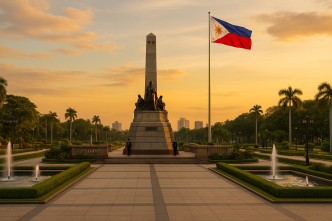
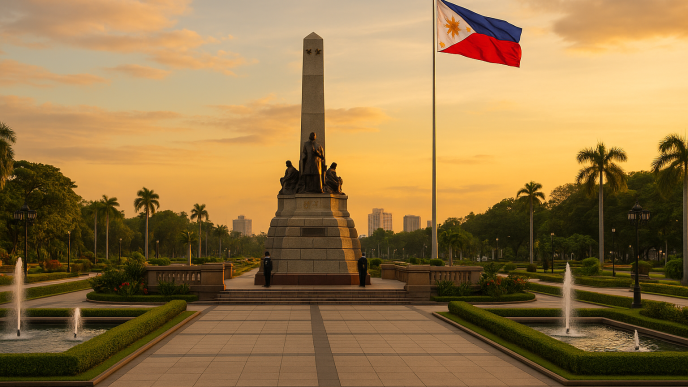
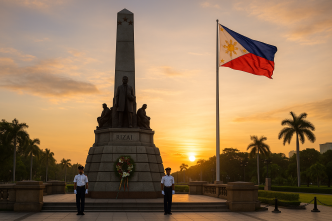
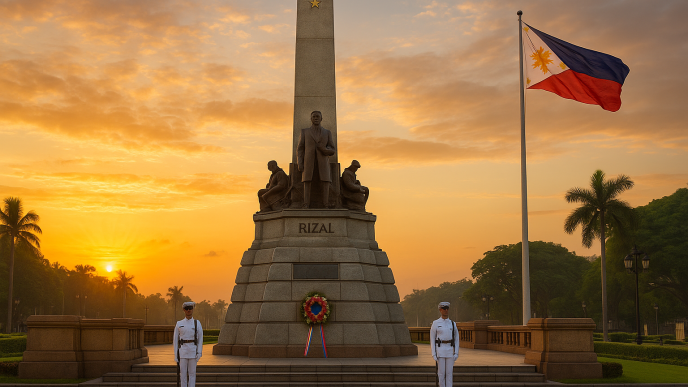
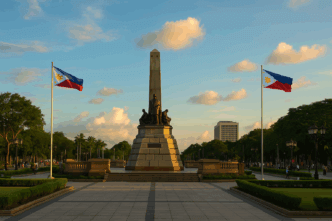
Most visits begin at the Rizal Monument, the iconic stone obelisk watched over by the elite Philippine Marine Honor Guard. For tourists seeing it for the first time, the monument is surprisingly simple — but its emotional weight becomes clear when you understand its significance. This is where Rizal’s remains are interred, and where major civic ceremonies take place.
The best time to visit the monument is early morning or late afternoon, when the light softens and the park grows quiet. It is also one of Manila’s favorite spots for sunrise photos.
The Kilometre Zero Marker
A few steps away is a small yet symbolic landmark: Kilometre Zero, the point from which road distances across the Philippines are measured. Standing here gives visitors a sense of being at the symbolic starting point of the archipelago’s journeys.
Walk Through the Open Lawns
Rizal Park’s broad lawns are ideal for slow strolling. Families picnic here, joggers cut through the paths at dawn, and students gather under trees to rehearse performances or study.
For visitors, the open spaces provide a welcome breather from Manila’s busy streets. Bring water, wear light clothing, and enjoy the shade — Manila’s humidity is a part of the experience.
Visit the Rizal Execution Site
A bronze tableau marks the exact location of Rizal’s execution. The scene — Rizal facing the dawn, soldiers ready to fire — is solemn and moving, especially when paired with the knowledge that this ground once served as a public execution field.
Most tourists spend a quiet moment here. It is one of the park’s most historically powerful stops.
Explore the Japanese and Chinese Gardens
Two walled spaces inside the park offer calm, landscaped retreats: the Japanese Garden and the Chinese Garden. Each has ponds, archways, bridges, and curved pathways that create pockets of silence away from the busier sections of Luneta.
These gardens are best visited in the late morning or early afternoon, when the trees cast shade across the walkways. Some visitors bring sketchbooks; others simply rest on the benches.
The National Museum Complex
One of the best features of visiting Rizal Park is its proximity to Manila’s museum district. Just across the street stand several world-class museums:
- National Museum of Fine Arts
- National Museum of Anthropology
- National Museum of Natural History
Admission is free, and each building can easily take one to two hours to explore. The museums house national treasures: Luna’s “Spoliarium,” ethnographic collections, Philippine biodiversity exhibits, and countless artifacts.
If you visit the park in the morning, spend the hotter midday hours in one of the museums before returning outdoors later in the day.
The Open-Air Theater and Concert Grounds
Rizal Park has long served as a venue for concerts, festivals, and cultural shows. Depending on the date of your visit, you may find:
- Free weekend concerts
- Cultural dance performances
- Civic competitions
- Open-air film screenings
Even if no major event is scheduled, the grandstand and amphitheater offer a picturesque walk and a sense of the park’s role as a civic gathering place.
The Manila Ocean Park, Just a Walk Away
Behind the park, near the shore, lies Manila Ocean Park, one of the city’s most popular family attractions. For visitors, this offers an excellent combination: a morning of history at Rizal Park followed by an afternoon of marine exhibits, aquariums, and sea lion shows.
The location makes it easy to combine both experiences into one day.
Explore Nearby Historic Spots
Because of its central location, Rizal Park sits close to key historical landmarks:
Intramuros
A short taxi or Grab ride away, Intramuros (the old walled city) is a must-see. Fort Santiago — where Rizal was imprisoned before his execution — offers an emotionally powerful extension of your visit to Rizal Park. The Rizal Shrine inside the fort displays manuscripts, letters, and memorabilia.
Manila Hotel
Built in 1912, the Manila Hotel sits at the edge of Luneta and is one of the city’s most historic buildings. Even if you’re not staying there, you can stop in for coffee at the lobby or sunset views from the bay-facing restaurants.
Quirino Grandstand and the Baywalk
The Quirino Grandstand is a major ceremonial site, and beyond it lies the Manila Baywalk, offering sunset views considered among the best in Asia.
Activities for Children and Families
Rizal Park is family-friendly, with open lawns, playgrounds, a small orchidarium, and photo-worthy installations. Children often enjoy:
- Running through the wide lawns
- Feeding pigeons
- Exploring the relief map of the Philippines
- Visiting the nearby Ocean Park
On weekends, vendors sell balloons, local snacks, and small toys — a festive atmosphere reminiscent of Manila’s older public parks.
Tips for Visiting Rizal Park
Best Time to Visit
- Early morning (6–9 AM): cooler, great for walks
- Late afternoon to early evening (4–7 PM): comfortable, beautiful golden light
- Avoid noon to 3 PM if possible — Manila heat can be intense
Safety Tips
- Stay aware of belongings in crowded areas.
- Avoid wandering too far toward unlit corners after dark.
- Stick to main paths and well-populated zones.
What to Bring
- Water bottle
- Comfortable walking shoes
- Light clothing
- Umbrella or hat for shade
- Camera or phone for photos
Recommended Duration
For the full experience: 2–4 hours
Combined with museums: half-day
Combined with Intramuros: full day
Food Options Nearby
There are food stalls inside the park, but better dining options are found along:
- Roxas Boulevard
- Intramuros restaurants
- Manila Hotel dining halls
- Luneta’s perimeter cafes
For a local experience, visitors often try street snacks near the park entrances: corn, taho, ice cream, or fresh fruit.
A Park That Grows With the City
Rizal Park continues to evolve. Recent improvements — upgraded paths, new gardens, restored monuments, security enhancements — show a commitment to preserving this national space. As Manila changes, the park adapts, offering a balance of leisure and memory.
It is both a tourist attraction and a living civic center, shaped not just by history but by the everyday choices of people who visit it, rest in it, protest in it, and celebrate in it.
Conclusion
A visit to Rizal Park is both an educational and personal experience. You can stand before the monument that marks a hero’s martyrdom, walk through gardens that soothe the city’s chaos, explore museums that tell the nation’s story, and step into surrounding sites where Manila’s history continues to unfold.
For tourists, the park is a gateway to understanding the Philippines. For Filipinos, it remains an anchor — a place where memory and modern life meet. Every pathway, garden, and museum surrounding the park contributes to a larger picture of the nation’s journey.
Whether you come for reflection, photography, leisure, or learning, Rizal Park offers a space where history lives, breathes, and accompanies you as you explore Manila.