Quick Summary
Rizal Park, once the execution ground of colonial Manila, has become the nation’s foremost civic space. It preserves the memory of Rizal’s martyrdom while serving as a gathering place where Filipinos reflect, protest, celebrate, and imagine their future.
Introduction
Rizal Park is one of the most emotionally powerful sites in the Philippines. Tourists know it as a landmark, students as a mandatory field trip, and Filipinos as a symbol of nationhood. Yet its story is deeper than its postcard images. Long before it became a place of gardens and monuments, it was Bagumbayan, a field marked by fear and political death. Over time, the place where the colonial government once tried to silence Filipino aspirations became the very ground on which national identity grew.
To understand Rizal Park is to understand the transformation of space, memory, and history. It is a symbol of pain, pride, and rebirth — a piece of land where the country’s past and its possibilities converge.
Bagumbayan: A Field of Martyrs
Before it became a park, the area was known as Bagumbayan, the “new town” outside Intramuros. During the Spanish colonial period, it was a wide, open field used for parades, military drills, and public executions. The colonial government chose it precisely because it was visible. Executions performed here were meant to send a clear message: rebellion would not be tolerated.
Some of the most significant deaths in Philippine history took place on this soil. Fathers Mariano Gómez, José Burgos, and Jacinto Zamora — collectively known as Gomburza — were executed here in 1872 after the Cavite Mutiny. Their deaths profoundly shaped the political consciousness of young reformists, including Rizal.
Other Filipino rebels, activists, and outspoken critics also met their end in Bagumbayan, making the site a silent witness to generations of resistance long before Rizal fell.
Rizal’s Execution and the Birth of a Memorial
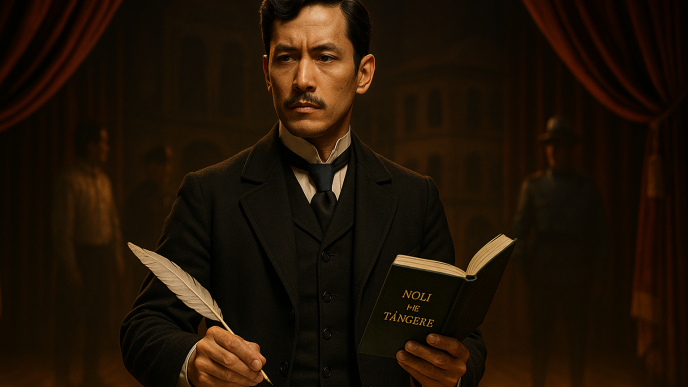
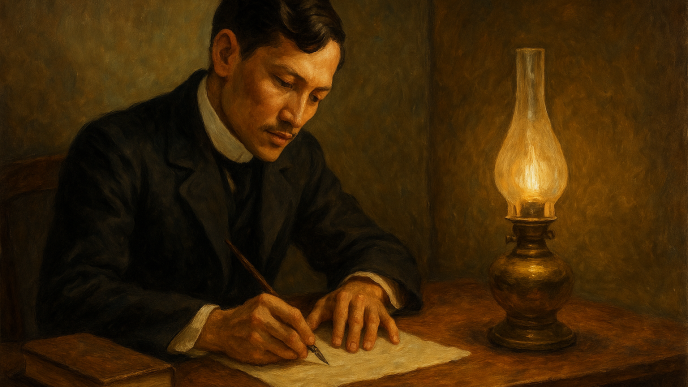
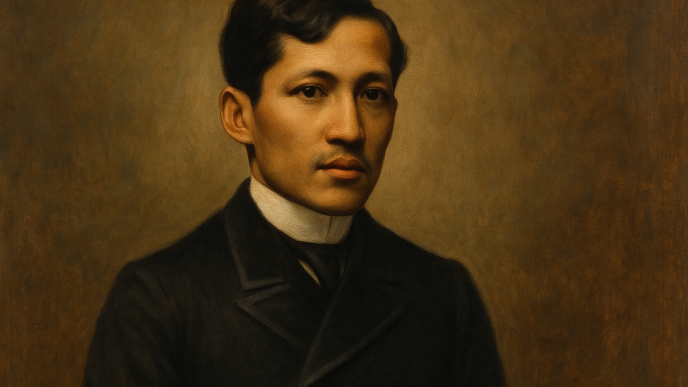
On the morning of December 30, 1896, Jose Rizal walked across this field under heavy guard. His execution, intended to crush the reform movement, instead ignited the fire of revolution. The spot where he fell became a point of pilgrimage long before it became an official monument. People left flowers, whispered prayers, and reflected on what his life had meant.
In 1901, during the early years of American rule, the site was renamed “Rizal Park” as part of a broader effort to honor Filipino heroes and foster a sense of national identity. This marked a significant shift: the place once used to terrify Filipinos into silence was now dedicated to the very man whose ideas had inspired them to speak out.
Building the Rizal Monument
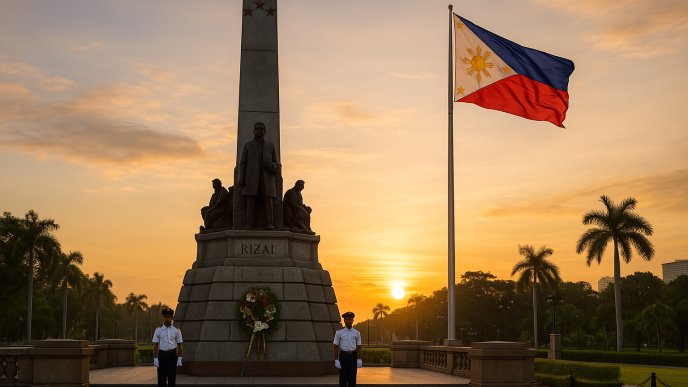
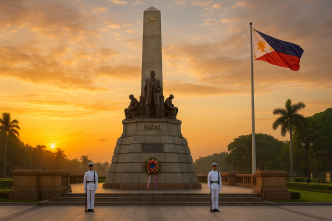
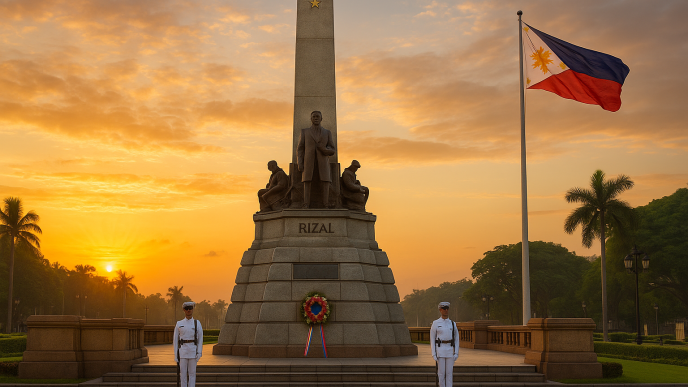
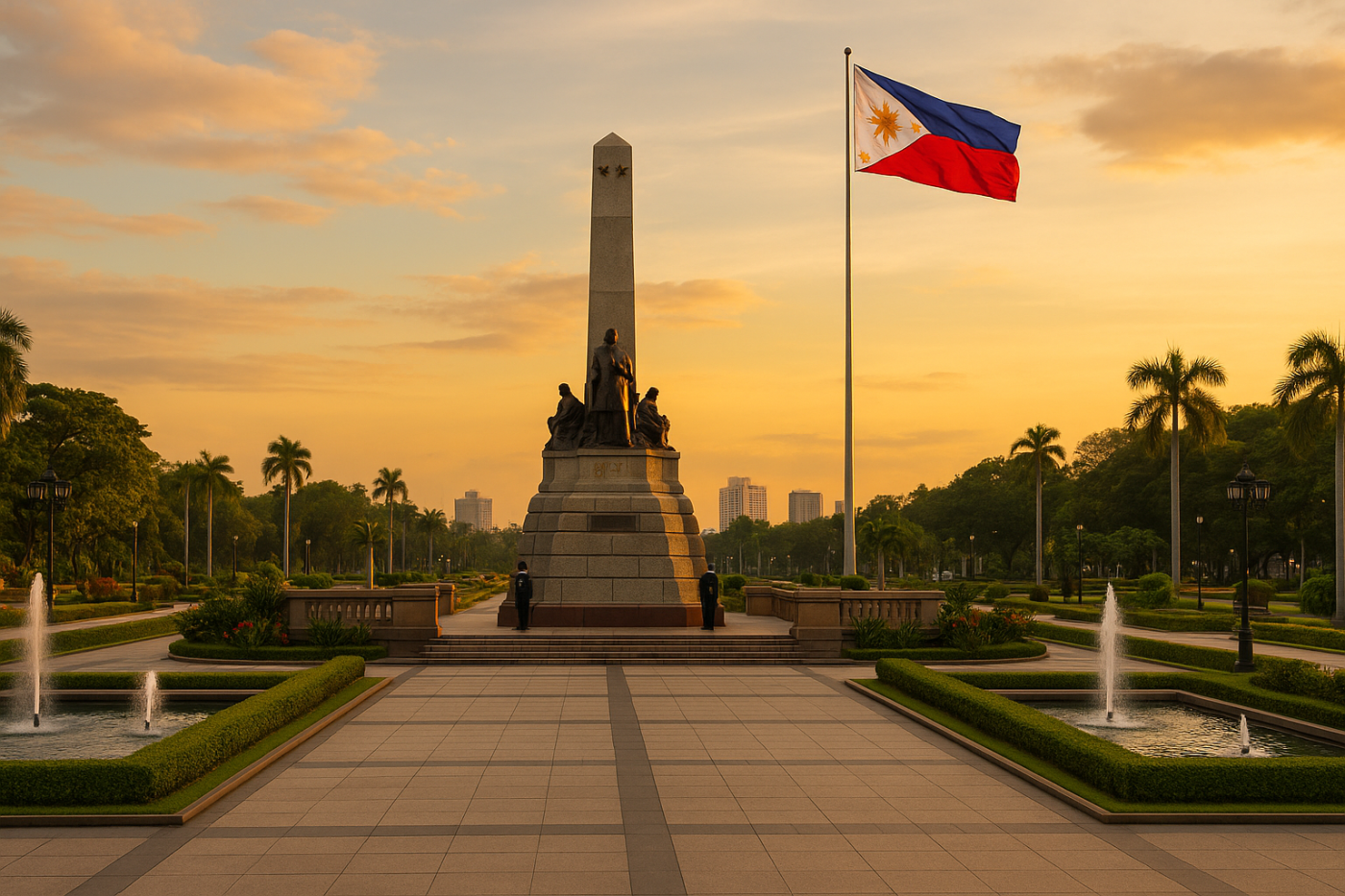
The most recognizable feature of the park is the Rizal Monument, completed in 1913 after an international design competition. The simple yet solemn statue was created by Swiss sculptor Richard Kissling. It portrays Rizal holding a book, suggesting both his intellectual legacy and his final hours writing letters and reflections.
Beneath the statue lies Rizal’s remains, transferred from Paco Cemetery in 1912. The monument’s three bronze stars on the base symbolize Luzon, Visayas, and Mindanao — a subtle reminder that the ideals Rizal died for were meant for the entire archipelago.
Through political upheavals, wars, and social change, the monument has endured as one of the Philippines’ most recognizable symbols. It is both a memorial and a compass. Visitors stand before it not just to honor Rizal, but to confront the question of what the nation still needs to become.
Rizal Park as Civic Space
Throughout the 20th century, Rizal Park evolved into the country’s foremost public gathering place. Its vast open spaces made it the perfect venue for parades, political rallies, and cultural festivals. Presidents took oaths here. Movements began here. Families gathered here on Sundays. Students studied beneath its trees.
The park’s design — wide lawns, open horizons, and shaded pockets — encourages contemplation and communal bonding. Unlike enclosed monuments, Rizal Park is a living space. Children run near the monuments. Couples take walks near the gardens. Protesters march across the same ground where Rizal once walked toward death.
This blending of leisure, memory, and citizenship makes Rizal Park unique. It is not only a memorial; it is a civic heart.
The Kilometer Zero Marker
Near the Rizal Monument stands the Kilometer Zero marker, the point from which all distances in the Philippines are measured. Its placement is symbolic. It suggests that Manila — and by extension the nation — begins at the feet of Rizal, the man whose ideas helped define its identity.
In this way, the park becomes a literal and symbolic starting point for journeys across the archipelago.
Gardens, Museums, and Symbolic Spaces
Over the years, various sections of Rizal Park have been developed to reflect different aspects of Filipino culture and Rizal’s legacy.
The Luneta Lagoon, with its iconic dancing fountain, offers a peaceful area for reflection. The Chinese and Japanese gardens honor friendship with other Asian nations while providing quiet corners within the park. The National Museum complex nearby forms an intellectual ring around the area, fusing natural beauty with cultural education.
One of the most striking features is the Rizal Execution Marker, a bronze tableau showing Rizal’s final moments — soldiers, commanders, and the hero himself turning toward the dawn. This sculpture grounds the park’s leisure with historical weight, reminding visitors that behind the greenery lies the memory of sacrifice.
Rizal Park During Wars and Revolutions
Rizal Park has survived turbulent chapters in Philippine history. During the Japanese occupation in World War II, the area became a battleground. After liberation, the park was rebuilt, symbolizing resilience and renewal.
In the decades that followed, it served as the stage for massive political gatherings. The 1986 People Power Revolution did not take place at Luneta, but the spirit of mass solidarity often flowed into the park during the years that followed. Presidents delivered speeches here. Movements demanded reform here. National mourning took place here.
The park’s landscape has absorbed layers of political emotion — grief, hope, anger, celebration — making it one of the most symbolic public spaces in the country.
The Park Today
Today, Rizal Park is both a tourist destination and an everyday refuge. Schoolchildren gather around the monument for history lessons. Joggers circle the grounds in the early morning. Families picnic on the lawns during weekends. Cultural festivals fill the air with music and movement.
Though surrounded by modern Manila — traffic, skyscrapers, and commercial activity — the park remains a pocket of open sky, a place where the city slows down and remembers.
Its continued renovation and preservation efforts reflect a national desire to safeguard history while keeping the park inviting to future generations.
Why Rizal Park Still Matters
Rizal Park matters because it represents transformation. A place once used to silence Filipinos now honors their greatest advocate for enlightenment and reform. It is a national memory site, a public classroom, a civic meeting ground, and a living symbol of shared identity.
It is where the story of Rizal ended and, in many ways, where the story of the Filipino nation began.
Conclusion
Rizal Park began as Bagumbayan, a field of death. Over time, it became a sanctuary for life, reflection, and collective identity. It stands today as a testament to the Filipino capacity for renewal — a reminder that even spaces marked by suffering can be reclaimed, reimagined, and turned into sources of national pride.
To walk through Rizal Park is to walk through Filipino history. The footsteps trace sorrow, rebellion, hope, and rebirth. And at the center of it all stands Rizal, eternally watching over a nation still striving to fulfill the ideals he died for.