Background
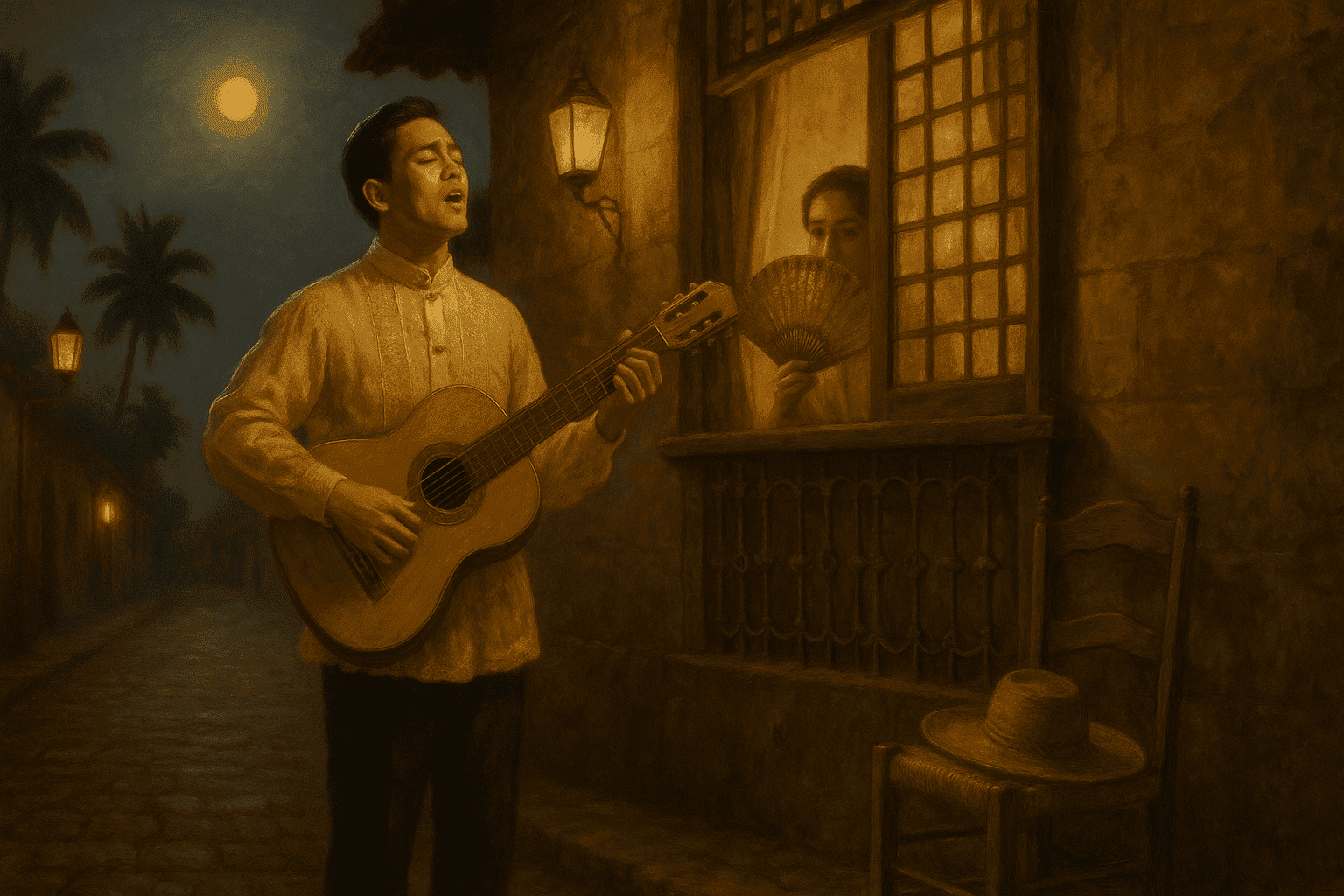
José Rizal’s Kundiman is one of his clearest poetic declarations of love for the Philippines. Written in Tagalog around 1891, it takes its title from the traditional Filipino love song often used by a suitor to serenade the woman he loves. In Rizal’s hands, however, the beloved is not a single person but the Motherland herself. The poem speaks in the language of longing and devotion, but beneath its tenderness lies a powerful sense of protest and hope.
By the time he wrote Kundiman, Rizal had already witnessed deep injustices under Spanish colonial rule: abuses by friars, repression of reformers, and the suffering of ordinary Filipinos. The poem reflects grief over a “vanquished” country, but it never stays in despair. Instead, it expresses confidence that the “maligayang araw” will rise again for an oppressed nation and that the name “Tagalog” will once more be honored in the world. In this way, Kundiman turns the private tone of a love song into a public vow of patriotism.
The Full Poem: Kundiman (Original Tagalog)
Tunay ngayong umid yaring dila’t puso
Sinta’y umiilag, tuwa’y lumalayo,
Bayan palibhasa’y lupig at sumuko
Sa kapabayaan ng nagturong puno.
Datapuwa’t muling sisikat ang araw,
Pilit maliligtas ang inaping bayan,
Magbabalik mandin at muling iiral
Ang ngalang Tagalog sa sandaigdigan.
Ibubuhos namin ang dugo’t babaha
Matubos nga lamang ang sa Amang Lupa
Habang di ninilang panahong tadhana,
Sinta ay tatahimik, tutuloy ang nasa!
Sinta ay tatahimik, tutuloy ang nasa!
O Bayan kong mahal
Sintang Filipinas!
Analysis
Kundiman is short, but it carries an emotional and political weight far beyond its length. The poem begins with a confession of silence: “Tunay ngayong umid yaring dila’t puso.” Tongue and heart are “mute,” not because love has vanished, but because the country has been “lupig at sumuko” — oppressed, defeated, and forced to submit. In four lines, Rizal paints a portrait of a nation brought low not only by foreign rule but by “sa kapabayaan ng nagturong puno,” the negligence of those who were supposed to lead.
Despite this darkness, the poem quickly pivots to hope. The second stanza announces that “muling sisikat ang araw.” The day of happiness will rise again, and the “inaping bayan” — the oppressed country — will be rescued. Rizal’s confidence is not vague optimism; it is tied to a specific vision: that “ang ngalang Tagalog sa sandaigdigan” will return and endure, meaning Filipino identity will once again be recognized and respected throughout the world. Here, “Tagalog” stands as a poetic shorthand for the Filipino people as a whole, not just one ethno-linguistic group.
The final stanza intensifies the emotional stakes. Rizal speaks of pouring out blood “ibubuhos namin ang dugo’y ibabaha” to redeem the “Amang Lupa,” the Fatherland. The image is both sacrificial and resolute. Freedom is not to be begged for; it is to be earned at the highest possible cost. Yet even here, the language remains framed as a kundiman — a love song. The beloved is addressed as “Sinta,” and love chooses to remain silent until the destined time arrives: “Habang di ninilang panahong tadhana / Sinta ay tatahimik, tutuloy ang nasa!” Love is quiet but not extinguished. Its desire persists, waiting for the right moment to act.
The final lines, calling out “O Bayan kong mahal, Sintang Filipinas,” bring the poem’s metaphor into full clarity. The lover is Rizal and, by extension, all patriots. The beloved is the Philippines. What begins as a lament ends as a vow: a promise that, until the appointed time, desire for freedom will remain constant, even if it must stay hidden. This mixture of tenderness and fierceness is the essence of Kundiman as both a form and a poem.
In Kundiman, Rizal succeeds in transforming a traditional love song into a vehicle for nationalist feeling. He does not abandon the emotional softness of the genre; instead, he harnesses it to express something deeper — a love willing to bleed, to wait, and to hope. The poem is a reminder that patriotism, in Rizal’s imagination, is rooted not only in struggle and sacrifice but also in an almost intimate, personal devotion to the country he calls “Sintang Filipinas.”